



Jessica Bian (NAE member, IEEE Fellow)
CTO, RAS Fusion, USA
Keynote Talk Title: Greening the Cloud: Sustainable Energy for Data-Driven Futures
Time: 8:30am - 9:30am, Wednesday, February 18, 2026
Abstract:
As the backbone of our digital world, cloud computing powers everything from artificial intelligence to global communication. Yet behind its seamless convenience lies a growing environmental cost. This keynote explores the urgent need to reimagine cloud infrastructure through the lens of sustainability. It examines the energy demands of hyperscale data centers, the carbon footprint of global data traffic, and the hidden costs of digital consumption. Attendees will gain innovative strategies on how to reduce energy use and how providers, developers, and policymakers can collaborate to build a data-driven future that’s not only intelligent, but also ecologically responsible.
Biography:
Dr. Jessica Bian is a visionary leader and architect. She has spearheaded the electric power industry's reliability metrics and grid risk assessment. She is currently CTO at RAS Fusion. Before that, she was with Grid-X Partners, and the Federal Energy Regulatory Commission (FERC), Washington, DC. Previously, she was the Director of Performance Analysis at North American Electric Reliability Corporation (NERC) in Atlanta, Georgia. Under her leadership, a total of 18 industry-wide reliability indicators were established to determine grid reliability, adequacy, and associated risks. She is widely recognized as a pioneer and trusted world leader in the field. She is a Fellow of IEEE, and a member of US National Academy of Engineering. She serves as the 2024-2025 Chair of IEEE Industry Engagement Committee. She was the 2022-2023 President of the IEEE Power & Energy Society (PES).
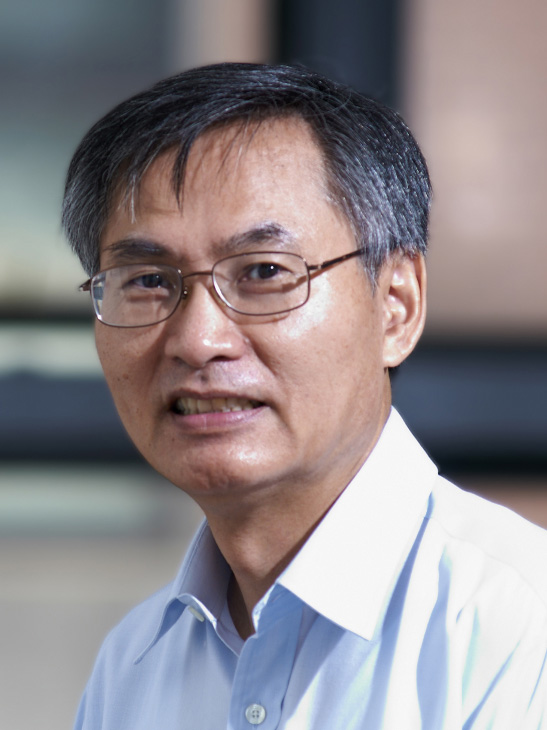
Homer Chen (IEEE Life Fellow)
Distinguished Professor, National Taiwan University, Taiwan
Keynote Talk Title: Light Field Technology for AI/AR Glasses
Time: 8:30am - 9:30am, Thursday, February 19, 2026
Abstract:
Visual comfort is critical to AI/AR glasses, which use artificial intelligence to relay information and free people from grabbing their phones every few seconds. However, most near-eye 3D AI/AR displays available in the market have one single fixed focal plane, resulting in the notorious vergence-accommodation conflict that can easily cause users to feel dizzy or nauseous and prohibits long-duration wearing. The conflict can be resolved by revolutionizing the fundamentals of 3D displays from “showing stereo images on display panels” to “projecting light rays of 3D content to human eyes.” By producing the light rays as if they are originated from a natural scene, such 3D displays may offer continuous focus that allows users to comfortably focus at any distance while having a consistent depth perception of the virtual and real objects. This talk presents enabling technologies of true light field AI/AR glasses.
Biography:
Dr. Homer Chen received his PhD in electrical and computer engineering from the University of Illinois at Urbana-Champaign. He is a distinguished professor at the Department of Electrical Engineering, National Taiwan University. Prior to that, he held various R&D management and engineering positions at U.S. companies over a period of 17 years, including AT&T Bell Labs, Rockwell Science Center, iVast, and Digital Island. His research interests include computational photography, multimedia signal processing, and augmented reality. He was a U.S. delegate for ISO and ITU standards committees and contributed to the development of many new interactive multimedia technologies of the MPEG-4 and JPEG-2000 standards. Currently, he serves as the chair of the IEEE SPS Fellow Evaluation Committee and a member of the IEEE Jack S. Kilby Signal Processing Medal Committee. Dr. Chen is an IEEE Life Fellow and the founder of PetaRay, a startup spun off from National Taiwan University and specialized in near-eye light field display.
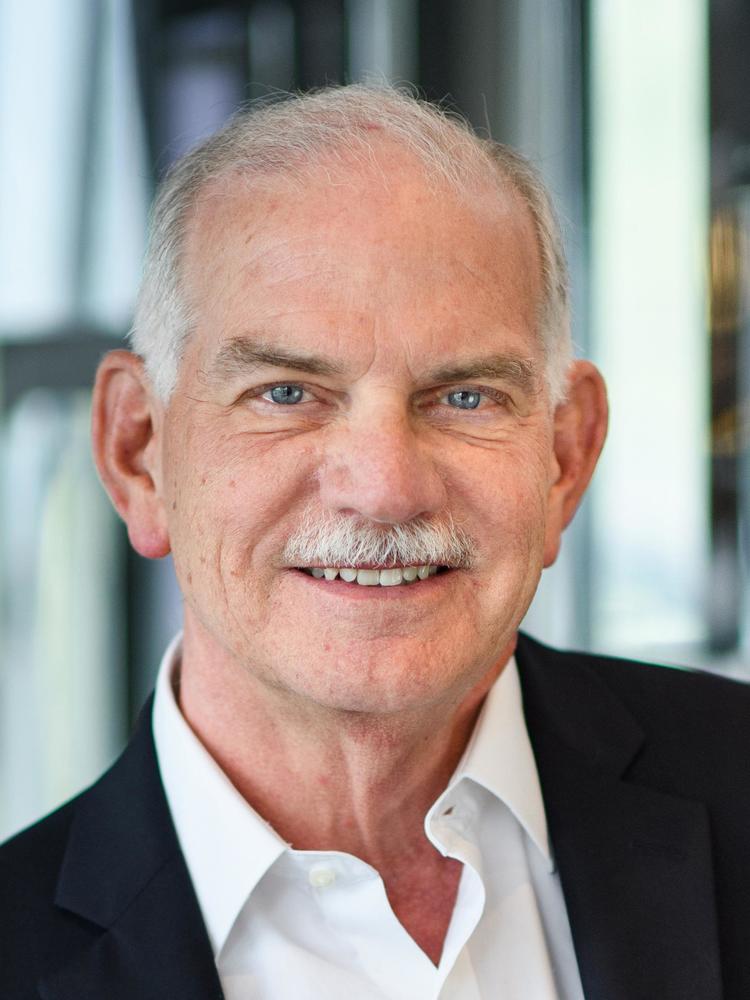
H. Vincent Poor (NAS/NAE, IEEE/AAAS Fellow)
Michael Henry Strater University Professor, Princeton University, USA
Keynote Talk Title: Resource Constrained Learning over Wireless Networks
Time: 8:30am-9:30pm, Tuesday, February 17, 2026
Abstract:
It is anticipated that the next generation of wireless networks will incorporate AI to a significant degree at all network layers. A major part of this trend is the migration of AI and machine learning functions to the network edge. There are several reasons for this: (i) a growing number of AI applications demand implementations involving end-user devices, (ii) much data of interest is collected at the network edge, and (iii) fog/edge computing has emerged to take advantage of the increasing sophistication of end-user devices. A notable framework for engaging the wireless network edge in machine learning is wireless federated learning, in which multiple end-user devices collaborate with the help of an aggregator to build a common model, each using its local data. In this framework, exchanges between end-user devices and the aggregator necessarily take place over wireless links. Since wireless networks are notoriously resource-limited, this creates a situation in which the interactions between the wireless medium and machine learning algorithms must be considered as a factor in the design and implementation of AI applications. This talk will explore aspects of this problem, including tradeoffs among energy consumption and other criteria such as bandwidth efficiency, learning rate and data privacy.
Biography:
H. Vincent Poor is the Michael Henry Strater University Professor at Princeton University, where his interests include wireless networks and related fields. Among his publications is the recent book Machine Learning and Wireless Communications, published by Cambridge University Press. Dr. Poor is a member of the U.S National Academy of Engineering and the U.S. National Academy of Sciences, and he is a foreign member of the Royal Society and other national and international academies. Other recognition of his work includes the IEEE ComSoc Edwin Howard Armstrong Achievement Award and the IEEE Alexander Graham Bell Medal.
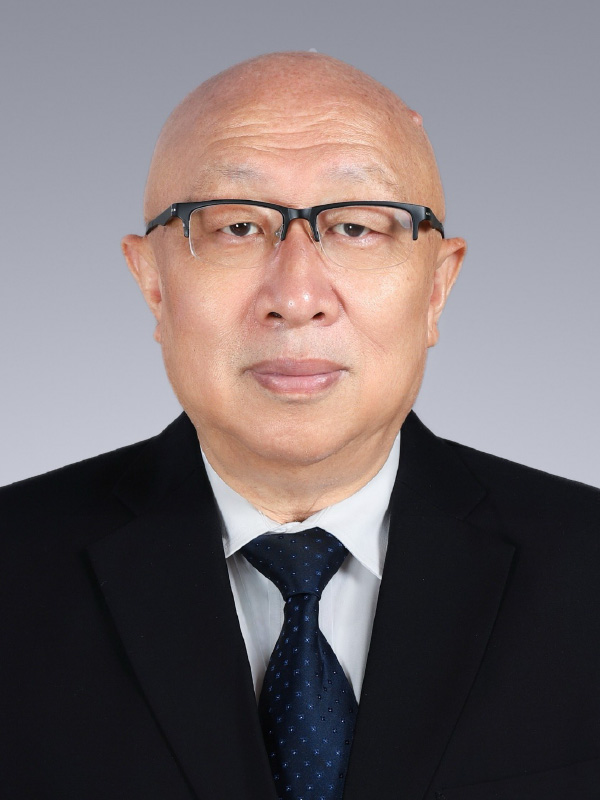
Prof. Wei Zhao (IEEE Fellow, IEAS Academician)
Provost, Shenzhen University of Advanced Technology
Senior Researcher, Shenzhen Institute of Advanced Technology, Chinese Academy of Sciences, China
Keynote Talk Title: From Classical Computing to Quantum Computing
Time: 8:30am - 9:30am, Monday, February 16, 2026
Abstract:
In this talk, we’ll compare the development trajectories of classical computing and quantum computing. Quantum computing—with its immense potential to revolutionize computational speed—has emerged as a cutting-edge frontier in computer science. Assuming no prior background in quantum physics, we’ll start by introducing the core concepts of quantum computing in accessible terms. Shifting to classical computing, we highlight that the development of (run-time) complexity theory ranks among the most profound contributions of the computer science community to human knowledge. This theory is foundational: it enables systematic comparison and classification of computational problems based on their resource requirements. However, we argue that for quantum computing, run-time complexity alone is insufficient. We propose introducing "design complexity" as an additional metric to quantify—and thus classify—the efforts involved in quantum program and system design. We’ll then delve into key challenges in resource management for both centralized and distributed quantum computing systems, exploring how these hurdles differ from (and intersect with) those in classical computing.
Biography:
Professor Zhao completed his undergraduate studies in Physics at Shaanxi Normal University, China, in 1977. He subsequently pursued advanced studies at the University of Massachusetts at Amherst, where he received his Master of Science (MSc) and Doctor of Philosophy (PhD) degrees in Computer and Information Sciences in 1983 and 1986, respectively. Throughout his distinguished academic career, Professor Zhao has held numerous prominent leadership positions across global institutions—including Eighth Rector (equivalent to President) of the University of Macau, Dean of Science at Rensselaer Polytechnic Institute (USA), Director of the Division of Computer and Network Systems (CNS) at the U.S. National Science Foundation (NSF), Chief Research Officer (equivalent to VPR) at the American University of Sharjah (UAE), Provost at the Shenzhen University of Advanced Technology (China), and Senior Associate Vice President for Research at Texas A&M University (USA). His leadership experience spans top-tier universities, research funding agencies, and interdisciplinary institutions, reflecting his profound influence across academia and research ecosystems worldwide.
An IEEE Fellow, Professor Zhao has made seminal contributions to multiple research fields, including cyber-physical systems, distributed computing, real-time systems, computer networks, and cyberspace security. Notably, during his tenure as Director of the NSF CNS Division in 2006, he led the development of the research agenda and establishment of the world’s first dedicated funding program for cyber-physical systems—pioneering the formalization of this critical interdisciplinary field. Professor Zhao’s academic achievements have been widely recognized: he has been conferred honorary doctorates by 12 universities worldwide and is an Academician of the International Eurasian Academy of Sciences.
Plenary Forum Time: 13:30pm - 15:30pm, Tuesday, February 17, 2026
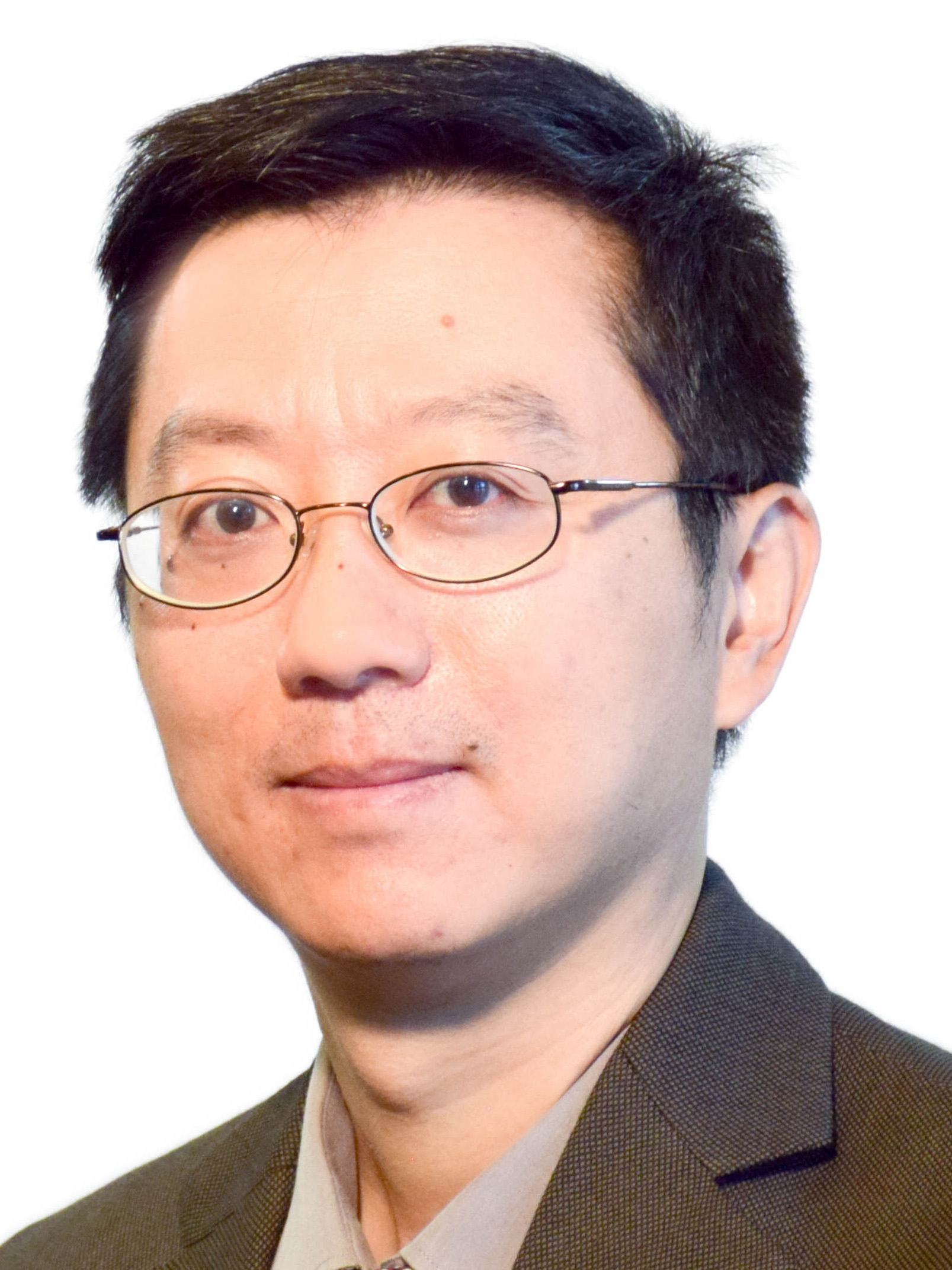
Huaiyu Dai (IEEE/AAIA Fellow)
NC State University, USA
Biography:
Huaiyu Dai received the B.E. and M.S. degrees from Tsinghua University, Beijing, China, in 1996 and 1998, respectively, and the Ph.D. degree from Princeton University, Princeton, NJ in 2002, all in Electrical Engineering.
He has been with NC State University since 2003, now holding the position of Professor and the title of University Faculty Scholar. His research interests include signal processing for communications and networking, network security, and machine learning, with over 300 peer-reviewed journal/conference papers published.
He has served as an Area Editor for IEEE Transactions on Communications, a member of the Executive Editorial Committee for IEEE Transactions on Wireless Communications (TWC), and an Editor for IEEE Transactions on Signal Processing. Currently he serves as the Editor-in-Chief for IEEE Transactions on Signal and Information Processing over Networks. He has been an Area TPC Chair for IEEE International Conference on Computer Communications (INFOCOM) since 2018. Previously, he served as a symposium Co-Chair multiple times for IEEE International Conference on Mobile Ad-hoc and Sensor Systems (MASS), IEEE International Conference on Communications (ICC), and IEEE Global Communications Conference (GLOBECOM). He received Qualcomm Faculty Award, and several best paper awards at IEEE MASS, ICC, and INFOCOM BIGSECURITY Workshop. He is a Fellow of IEEE and Asia-Pacific Artificial Intelligence Association.

Falko Dressler (IEEE/ACM/AAIA Fellow)
KProfessor, TU Berlin, Germany
Biography:
Falko Dressler is full professor and Chair for Telecommunication Networks at the School of Electrical Engineering and Computer Science, TU Berlin. He received his M.Sc. and Ph.D. degrees from the Dept. of Computer Science, University of Erlangen in 1998 and 2003, respectively. Dr. Dressler is an IEEE Fellow, an ACM Fellow, and an AAIA Fellow. He is a member of the German National Academy of Science and Engineering (acatech). His research objectives include next generation wireless communication systems in combination with distributed machine learning and edge computing for improved resiliency.
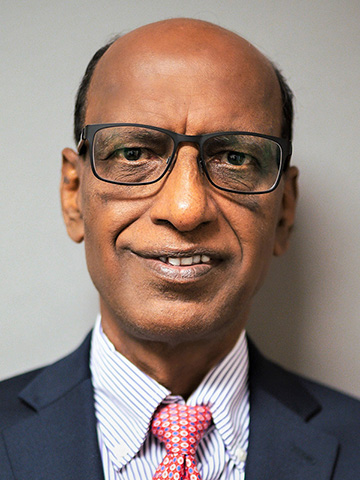
Kaushik Rajashekara (NAE member, IEEE/NAI/SAE Fellow)
Distinguished Professor of Engineering, University of Houston, USA
Biography:
Kaushik Rajashekara (Fellow, IEEE) received the Ph.D. degree in electrical engineering from the Indian Institute of Science, Bangalore, India. In 1989, he joined the Delphi division of General Motors Corporation in Indianapolis, USA, as a Staff Project Engineer. In Delphi and General Motors, he held various lead technical and managerial positions, and was a Technical Fellow and the Chief Scientist for developing propulsion and power electronics systems for electric, hybrid, and fuel cell vehicle systems. In 2006, he joined Rolls-Royce Corporation, as a Chief Technologist for electric systems for electric and hybrid aircraft systems. In August 2012, he joined as a Distinguished Professor of Engineering with the University of Texas at Dallas, TX, USA. Since September 2016, he has been a Distinguished Professor of engineering in University of Houston, Houston, TX, USA. He has authored or coauthored over 300 papers in international journals and conferences, has 37 US and 15 foreign patents, and has written one book. He has over 250 invited presentations in international conferences and universities. He has received a number of awards including the 2022 Global Energy Prize, 2021 IEEE Medal on Environment & Safety Technologies, and 2013 IEEE Richard Harold Kaufmann Award for his contributions to electrification of transportation and renewable energy. He was elected as a member of the U.S. National Academy of Engineering in 2012, a Fellow of the National Academy of Inventors in 2015, and an International Fellow of Indian (2013), Chinese (2021), and Japanese (2024) Academies of Engineering. His research interests include power/energy conversion, transportation electrification, renewable energy, and microgrid systems.
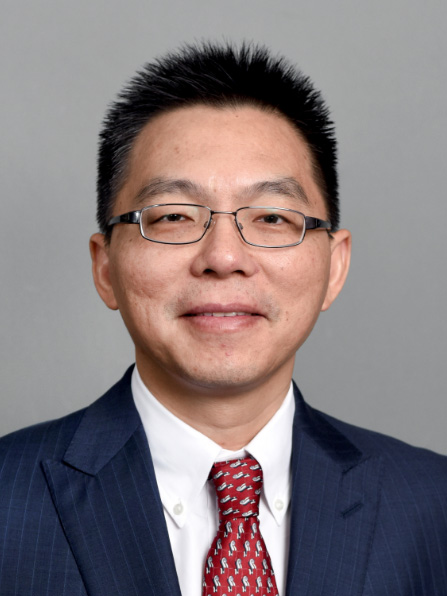
Junshan Zhang (IEEE/NAI Fellow)
University of California, Davis, USA
Biography:
Junshan Zhang is a professor in the ECE Department at University of California Davis. He founded Davis AI, Robotics and Edge Research Group.
He received his Ph.D. degree from the School of ECE at Purdue University in Aug. 2000, and was on the faculty of ASU from 2000 to 2021. His research interests fall in the general field of AI/ML and data science, including edge AI, physical AI and robot learning, Agentic AI, World Model, reinforcement learning, continual learning, network optimization and control, with applications in connected and automated vehicles, 5G and beyond, wireless networks, Internet of Things (IoT), and smart grid. He is fortunate to be one of the pioneering researchers in the areas of edge computing and edge AI, cross-layer optimization of wireless networks, and cooperative relaying.
Prof. Zhang is a Fellow of National Academy of Inventors (class of 2024) and Fellow of the IEEE (class of 2012). He is a recipient of the ONR Young Investigator Award in 2005 and the NSF CAREER award in 2003. He received the IEEE Wireless Communication Technical Committee Recognition Award in 2016. His papers have won a few awards, including the Best Student paper at WiOPT 2018, the Kenneth C. Sevcik Outstanding Student Paper Award of ACM SIGMETRICS/IFIP Performance 2016, the Best Paper Runner-up Award of IEEE INFOCOM 2009 and IEEE INFOCOM 2014, and the Best Paper Award at IEEE ICC 2008 and ICC 2017. Building on his research findings, he co-founded Smartiply Inc in 2015, an edge computing startup company delivering boosted network connectivity and embedded AI for IoT applications.
Plenary Forum Time: 13:30pm - 15:30pm, Wednesday, February 18, 2026
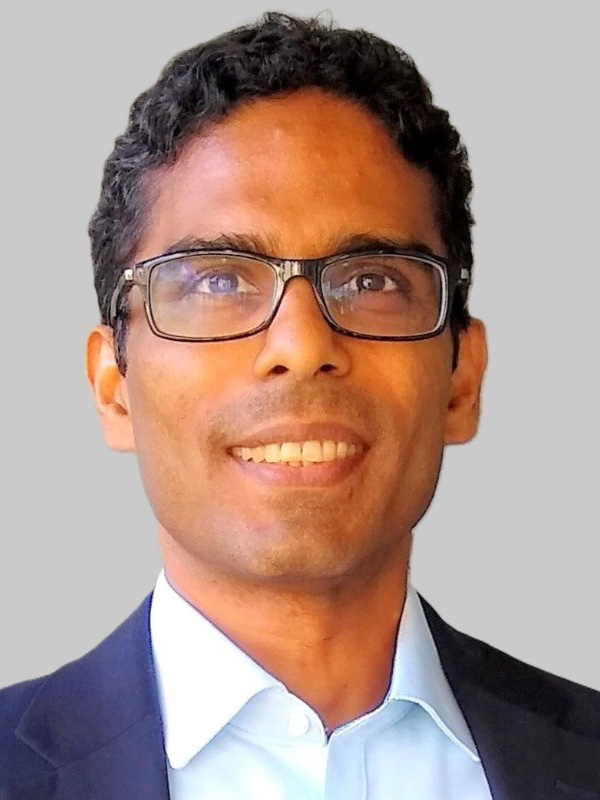
Satish Annapureddy
Amazon, USA
Biography:
Satish Annapureddy is a growth and innovation focused product leader passionate about growing businesses with new products, solutions, and partnerships. Over the last 20+ years, Satish has incubated many new products and partnerships involving connected devices, secure streaming, Cloud, and AI. As a Principal GenAI GTM Specialist at AWS, Satish contributes to GenAI product and partnership strategy and drives GTM with strategic M&E customers. Prior to joining AWS, Satish held leadership roles in product management and business development at Warner Brothers Discovery and Microsoft. As Director of Product Strategy & Technology Partnerships at Warner Brothers Discovery (WBD), Satish led various AI initiatives and partnerships across content management, distribution, and monetization. At Microsoft, Satish launched and drove adoption of Azure AI Machine Translation, Speech, and Media services and solutions with strategic customers and partners worldwide. Satish obtained his MBA from Cornell University and his MS in Computer Science from Utah State University.
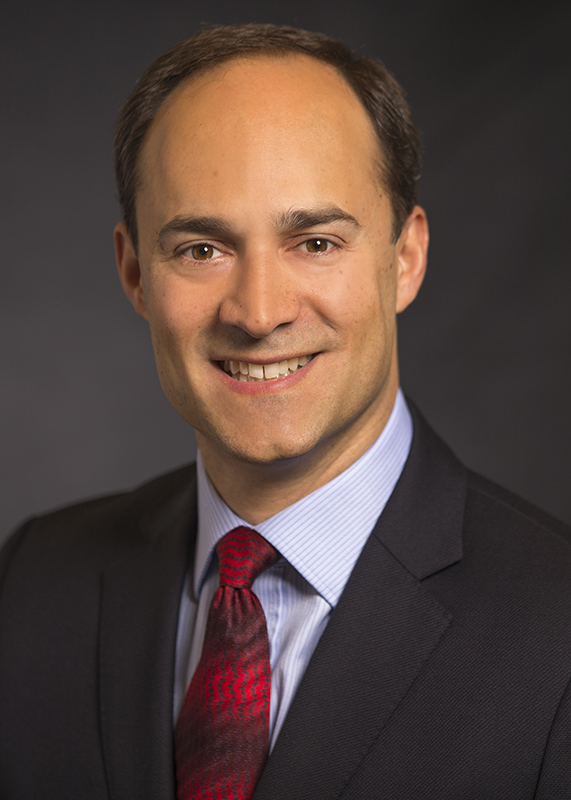
John Apostolopoulos (IEEE Fellow)
Google, USA
Biography:
John Apostolopoulos is Area Tech Lead of real-time video/audio and related ML/GenAI in Google Workspace, including Google Meet. Previously, he was VP/CTO of Cisco's Enterprise Networking Business, and also founded Cisco’s Innovation Labs. Prior to that, John was a Distinguished Technologist, and then Lab Director for the Mobile & Immersive Experience (MIX) Lab at HP Labs. The MIX Lab conducted research on novel mobile devices & sensing, mobile client/cloud multimedia computing, immersive environments, video & audio signal processing, computer vision & graphics, multimedia networking, glasses-free 3D, wireless, and user experience design. John is an IEEE Fellow, IEEE SPS Distinguished Lecturer, named “one of the world’s top 100 young innovators” by MIT Technology Review, and contributed to the US Digital TV Standard (Engineering Emmy Award). John was a Consulting Associate Professor of EE at Stanford. John served as chair of IEEE Image, Video & Multidimensional Signal Processing TC (08-09), and technical co-chair for IEEE ICIP'07, MMSP'11, ESPA'12, Packet Video’13, and also served on the IEEE SPS Board of Governors. He received his B.S., M.S., and Ph.D. in EECS from MIT.
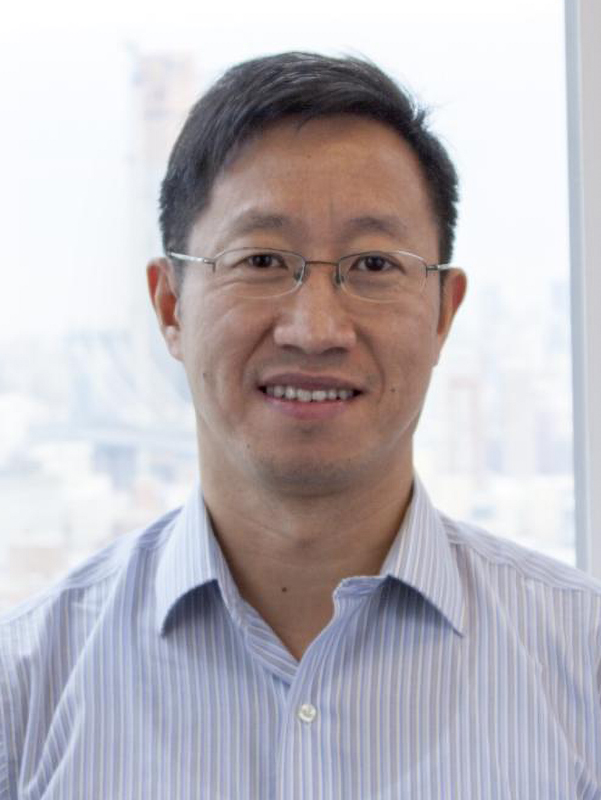
Yong Liu (IEEE Fellow)
New York University, USA
Biography:
Yong Liu is a full professor at the Electrical and Computer Engineering department of the Tandon School of Engineering of the New York University. He received his Ph.D. degree from Electrical and Computer Engineering department at the University of Massachusetts, Amherst, in May 2002. His current research directions include next generation networks and applications, overlay networks, network measurement, online social networks, and recommender systems. He is a Fellow of IEEE and member of ACM. He served as associate editor for the IEEE/ACM Transactions on Networking, and Elsevier Computer Networks Journal. He is the winner of the Best Paper Award of ACM/USENIX Internet Measurement Conference (IMC) 2012, the National Science Foundation Career Award in 2010, the Best Paper Award of IEEE Conference on Computer Communications (INFOCOM) in 2009, and the IEEE Communication Society Multimedia Communications Best Paper Award in 2008. More information about him is available at: http://eeweb.poly.edu/faculty/yongliu/

Panos Nasiopoulos (IEEE/CAE Fellow)
Professor, University of British Columbia (UBC), Canada
Biography:
Dr. Panos Nasiopoulos earned a Bachelor’s degree in physics from the Aristotle University of Thessaloniki, Greece, and his Bachelor’s, Master’s, and Ph.D. degrees in electrical and computer engineering from the University of British Columbia (UBC), Canada. He is a professor with the Department of Electrical and Computer Engineering and the former Director of the Institute for Computing, Information and Cognitive Systems and the Master of Software Systems at UBC. Before joining UBC, he was the President of Daikin Comtec US (co-founder of DVD) and Executive Vice President of Sonic Solutions. His research interests are primarily in the area of Digital Video Processing and Coding, he is the author or co-author of more than 250 research publications, and holds several patents. Dr. Nasiopoulos is a registered member of the Association of Professional Engineers and Geoscientists of British Columbia (APEGBC), Canada. He is a Fellow of IEEE, a Fellow of the Canadian Academy of Engineering, and has been an active member of the Standards Council of Canada, MPEG, SMPTE and IEEE.

Song Guo (IEEE/CAE/AAIA Fellow, MAE)
Chair Professor, Hong Kong University of Science and Technology, China
Plenary Talk Title: Novel Explorations in Edge Physical Intelligence
Time: 1:30pm-2:30pm, Thursday, February 19, 2026
Abstract:
Physical intelligence, as applied to edge systems such as robotics and autonomous driving, imposes increasingly stringent requirements on intelligent models. These models must not only comprehend and describe the world but also act effectively within it. To address the critical challenges faced by current intelligent models during edge deployment, e.g., limited computational resources, high storage consumption, inadequate inference capabilities, and poor physical adaptability, we undertake a series of novel explorations. Our objective is to develop truly embodied and adaptive edge physical intelligence. Specifically, to mitigate the substantial computational and deployment costs of intelligent models on edge devices, we introduce a policy-adaptive quantization technique. This approach effectively accelerates computation and reduces resource consumption, enabling models to operate efficiently on constrained hardware while maintaining high performance. Considering that edge devices struggle to meet the exponentially growing storage demands of intelligent models, we design and integrate an AI+SSD-based "infinite" memory mechanism to effectively support ultra-long context inference. Furthermore, to overcome the limitations of insufficient cognitive and inference capabilities in edge intelligent models, we propose a reinforcement learning-based "extreme cognitive learning" framework. This framework imbues models with meta-cognitive abilities such as self-reflection, evaluation, and control, thereby significantly enhancing their decision-making performance. Moreover, to tackle the challenges of low learning efficiency and slow adaptation to novel physical environments in physical intelligent models, we introduce a world model-driven "rapid evolution strategy." This strategy enables iterative interaction between simulated and real environments, leading physical intelligent models to efficiently acquire and optimize physical skills.
Biography:
Song Guo is a Chair Professor in the Department of Computer Science and Engineering at the Hong Kong University of Science and Technology. Prof. Guo made fundamental and pioneering contributions to the development of edge AI and machine learning systems. He has published many papers in top venues with wide impact in these areas and has been consistently recognized as a Clarivate Highly Cited Researcher. He is the recipient of IEEE 2024 Edward J. McCluskey Technical Achievement Award, and over a dozen Best Paper Awards from IEEE/ACM. Prof. Guo is the Editor-in-Chief of IEEE Transactions on Cloud Computing. He has served on IEEE Fellow Evaluation Committee for both Compuer and Communications Societies. He has also served as organizing and technical committee chair for many IEEE/ACM conferences and workshops. Prof. Guo is a Fellow of the Canadian Academy of Engineering, a Member of Academia Europaea, and a Fellow of the IEEE.

Honggang Wang (IEEE/AAIA Fellow)
Professor and Chair, Yeshiva University, USA
Plenary Talk Title: Cybersecurity in Mobile Health (mHealth): Challenges and Future Directions
Time: 2:30pm-3:30pm, Thursday, February 19, 2026
Abstract:
Mobile health (mHealth) is a rapidly expanding field that leverages mobile devices like smartphones and wearables to deliver healthcare services and information. While mHealth holds the potential to revolutionize healthcare, it also poses significant cybersecurity challenges. For instance, unauthorized access to sensitive patient data is a major concern, which can occur through compromised wearables or networks, resulting in data breaches. Consequently, ensuring security in mHealth applications is paramount to safeguarding the safety and efficacy of mHealth technologies.
My talk will delve into the evolving mHealth threat landscape, shedding light on real-world vulnerabilities in various components such as apps, APIs, and Internet of Medical Things (IoMT) devices. These vulnerabilities have profound implications for patient safety, privacy, and clinical operations. Additionally, I will provide an in-depth discussion of some research conducted in our group on the security of wireless Body area networks.
Biography:
Dr. Honggang Wang is the founding department chair and professor of the Department of Graduate Computer Science and Engineering at Yeshiva University's Katz School of Science and Health in New York City. He is also an affiliate faculty member of the Albert Einstein College of Medicine.
Dr. Wang is an alumnus of the NAE Frontiers of Engineering program and has supervised the graduation of over 30 graduate (12 Ph.D.) students. He has produced high-quality publications in prestigious journals and conferences in the fields of AI and Internet of Things, Multimedia Communications and Processing, Mobile Networks, Multimedia and Cyber Security, and Smart and Connected Health. Additionally, he has won several prestigious best paper awards throughout his career.
Dr. Wang is an IEEE distinguished lecturer and a Fellow of IEEE and AAIA (Asia-Pacific Artificial Intelligence Association). He served as the Editor in Chief (EiC) of IEEE Internet of Things Journal (5 Year Impact Factor: 11.7) from 2020 -2022. He was the past Chair of the IEEE Multimedia Communications Technical Committee (2018-2020) and the IEEE eHealth Technical Committee Chair (2020-2021).