


Panelists: Kazunori Mukasa, Masahiro Nakagawa, Hiroyuki Tsuda, Naoaki Yamanaka (Moderator)
Time: 4:00 pm - 6:00 pm, Monday, February 16, 2026
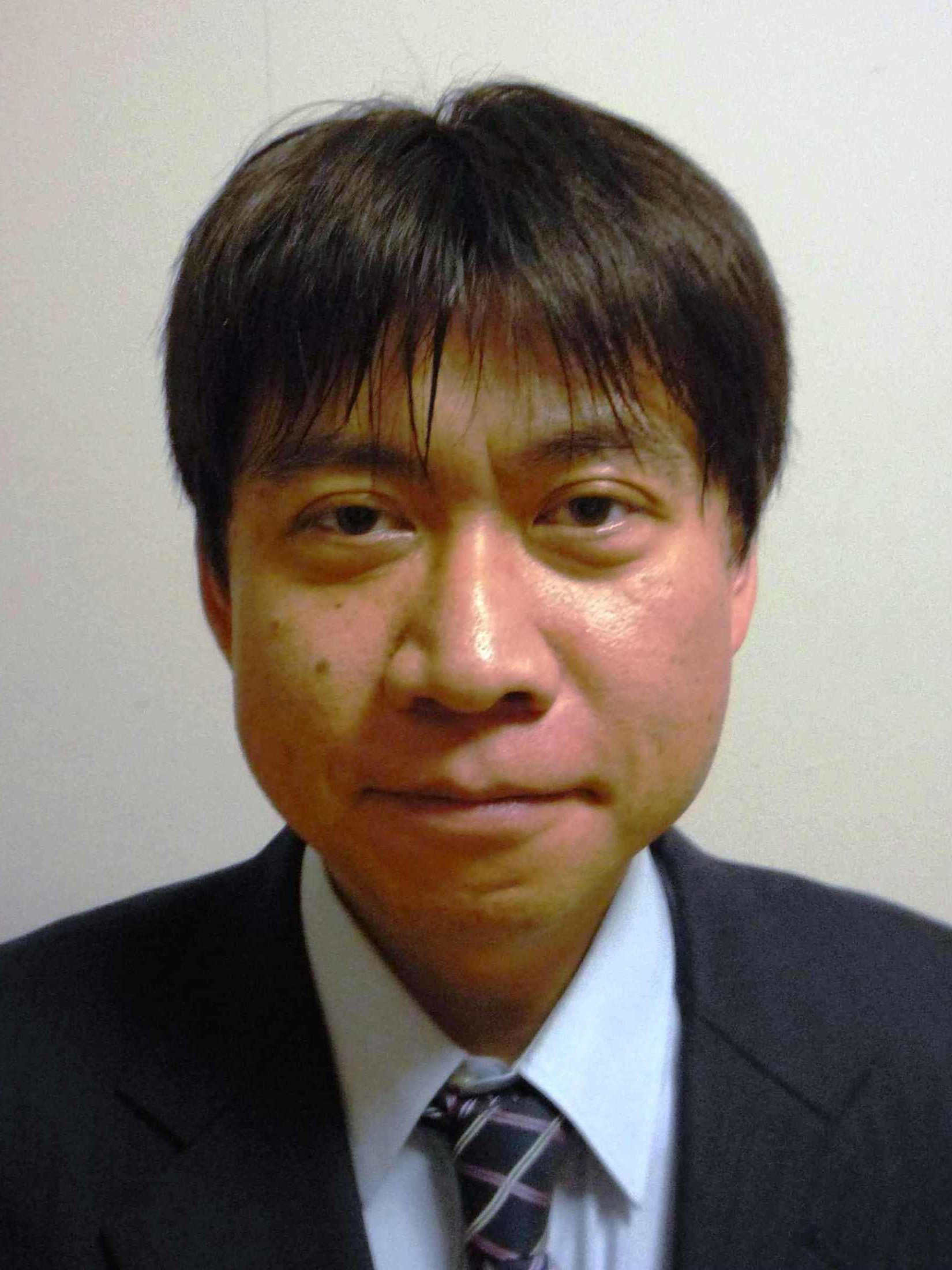
Kazunori Mukasa
Kazunori Mukasa, Lightera Japan Co., Ltd., Japan
Title: Current R&Ds of Hollow-core fibers
Abstract:
Hollow core fiber is an innovative optical fiber with the potential to break the limits of conventional silica-based optical fibers. Examples of innovations are ultra-low nonlinearity, ultra-low loss, and low latency. These unique properties would open many new applications and the investigations for practical use are also very active now. We report the recent R&Ds of hollow core fibers.
Biography:
Kazunori Mukasa joined Furukawa Electric, Chiba, Japan in 1996 and has been mainly investigated new types of transmission fibers. From 2004 to 2006, he worked as a visiting researcher in ORC, University of Southampton in the U.K. From 2012 to 2015, he belonged to OFS Laboratories in the USA, as a visiting researcher. Now, he is a research fellow of Lightera Japan, Mie, Japan, and mainly investigating the next-generation transmission fibers, including innovative silica-based fibers and hollow-core fibers.

Masahiro Nakagawa (CAE Fellow)
Network Service Systems Labs, Japan
Title: An overview of All-Photonics Network evolution: Latest achievements and future outlook
Abstract:
With the aggressive development of IoT and AI-related applications, demands for network capacity and connectivity have been explosively increasing. In addition, cyber-physical systems will enrich our daily lives but have a significant impact on network infrastructure in the near future. These trends are pushing the need for optical network evolution.
This talk presents an overview of recent progress in All-Photonics Network (APN) as a common social infrastructure, including technology development and use case demonstration. In particular, latest achievements in functional evolution will be reviewed for providing end-to-end direct connections on-demand. Capacity scaling leveraging state-of-the-art wavelength conversion technologies will also be discussed. Furthermore, several emerging technologies and advanced use cases will be introduced toward future multi-operator collaboration.
Biography:
Masahiro Nakagawa received the B.E., M.E., and Ph.D. degrees in Electrical Engineering and Computer Science from Nagoya University in 2008, 2010, and 2023, respectively. Since joining NTT in 2010, he has been engaged in R&D on transport network systems. His research interests include high-capacity optical cross-connect node systems and highly-efficient optical networking. Dr. Nakagawa is a Senior Member of the IEICE. He received the Best Tutorial Paper Award in 2025 from the IEICE Communications Society.
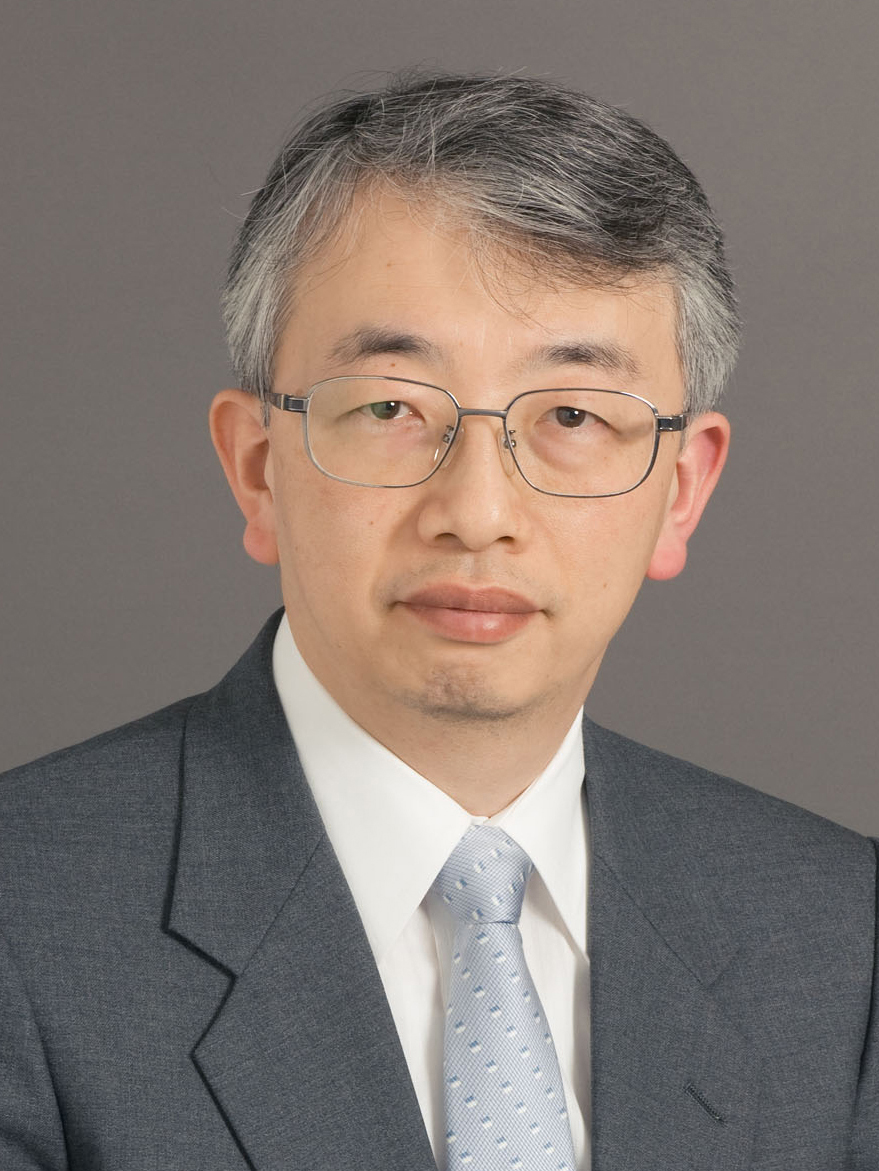
Hiroyuki Tsuda (IEICE Fellow)
Professor, West Virginia University, USA
Biography:
Hiroyuki Tsuda received a B.S. from Waseda University in Japan in 1985 and an M.E. and a Ph.D. from the Tokyo Institute of Technology in Japan in 1987 and 1998, respectively. He joined NTT Optoelectronics Laboratories in 1987, where he initially conducted research on nonlinear optical devices. From 1994 on, he worked on developing long-haul 10 Gbit/s transmission systems. In 1996, he researched optical signal processing for communication systems using arrayed-waveguide gratings. He also studied the hybrid integration of III-V devices onto CMOS circuits.
Since 2000, he has been a professor in the Department of Electronics and Electrical Engineering at Keio University. He was also a visiting professor at University College London in 2018. His research focuses on optical devices that use silica and silicon waveguides for optical communication systems, in-vehicle optical networks, and hollow-core fiber-based systems. He has published over 100 journal articles and holds multiple patents on optical devices. He is a fellow of the Institute of Electronics, Information and Communication Engineers of Japan. He is also a member of the IEEE Photonics Society, the IEEE Communications Society, Optica, the Japan Society of Applied Physics, the Laser Society of Japan, and the Optical Society of Japan.
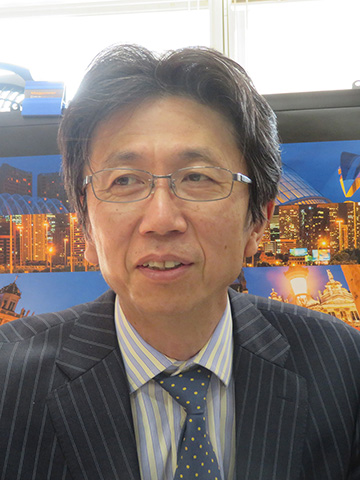
Naoaki Yamanaka (IEEE/IEICE Fellow)
Professor, Keio University, Japan
Biography:
Dr. Yamanaka graduated from Keio University, Japan where he received B.E., M.E., and Ph. D. degrees in engineering in 1981, 1983 and 1991, respectively. In 1983 he joined Nippon Telegraph and Telephone Corporation's (NTT's) Communication Switching Laboratories, Tokyo, Japan. His research areas are Network Architecture in Optical Network, Cloud Computing, Smart Network, Communication Protocol, and Optical Switching System. He received best paper award from IEEE CPMT and IEICE. And several best conference paper award including IEEE Globecom. He was a director of Asia Pacific Board at IEEE Communications Society, and is now president of IEICE. He is an IEEE Fellow, an IEICE Fellow, IPSJ senior member and IEEJ member.
This international panel is empowered by the international Open Research Infrastructures and Toolkits for 6G (OpenRIT6G) initiative (https://openrit-6g.org/) formed in 2023 aiming to build up an „Open 6G for all“, enabling researchers from both academia and industries to get an early access and handson understanding of emerging 6G technologies and applications.
In this session we will investigate the views of international experts on how to establish a realistic 6G infrastructure, enabling the different stakeholders (operators but also enterprises) to build their own customized 6G infrastructures in an efficient and sustainable way, based on an open ecosystem of vendors enabling to asure digital sovereignty. In this context an interesting question is where does the 6G infrastructure / architecture start and end and how does it relate to the many different end-to-end solution blueprints for dedicated vertical applications? Where is the borderline between „the network“ domain and the (vertical) application domains? We want to investigate the differentinternational approaches of well known research organisations to build up the related end-to-end research and development infrastructures and toolkits to identify and prototype relevant system component combinations for potential customer solutions. We want to discuss the aspects of openness, flexibility, open source, data, end systems, APIs, value chains in the evolution from 5G to 6G, the increasing role of AI in anf for Testbeds, and the role of international cooperation.
Guiding questions for the panel:
Panelists: Hakima Chaouchi, Falko Dressler, JongWon Kim, Thomas Magedanz (Moderator), Joyce Mwangama, Takehiro Nakamura, Ari Pouttu, Ivan Seskar, Sameh Yamany
Time: 4:00 pm - 6:00 pm, Wednesday, February 18, 2026

Thomas Magedanz
Director of NGNI, TU Berline, Germany
Biography:
Thomas Magedanz (PhD) has been professor at the Technische Universität Berlin, Germany, leading the chair for next generation networks (www.av.tu-berlin.de) since 2004. In addition, since 2003 he has been Director of the Business Unit Software-based Networks (NGNI) at the Fraunhofer Institute for Open Communication Systems FOKUS (www.fokus.fraunhofer.de/go/ngni) in Berlin. For 35 years Prof. Magedanz has been a globally recognized ICT expert, working in the convergence field of telecommunications, Internet and information technologies understanding both the technology domains and the international market demands. His interest is in software-based networks for different vertical industries, with a strong focus on building public and non-public campus networks. He became famous over the last two decades for the development of open software toolkits for building vendor independent open testbeds for next generation mobile networks, such as OpenIMSCore, OpenEPC, OpenMTC, OpenBaton, Open5GCore. His current interest is in the evolution from 5G to 6G and the development of the Organic 6G Core. For more details of his current work look here: www.6G-ready.org and www.open6Gnet.org
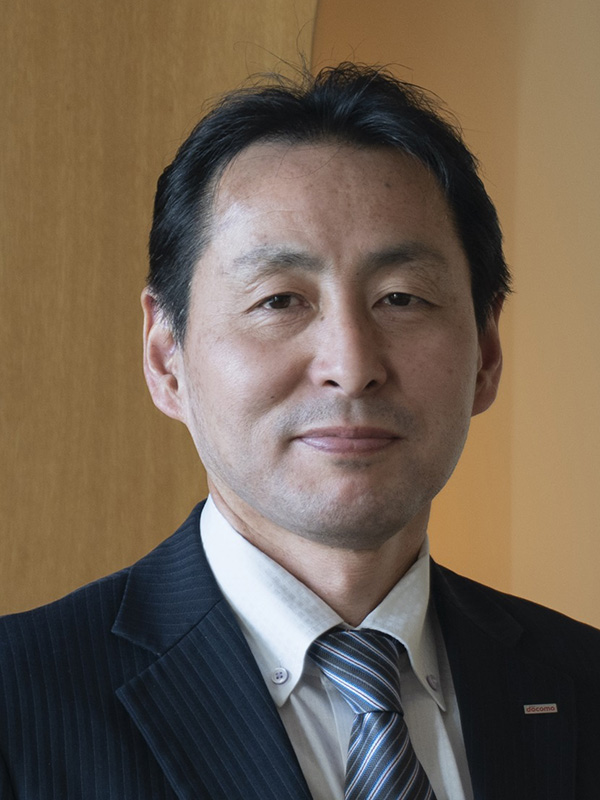
Takehiro Nakamura
Chief Standardization Officer, Docomo, Japan
Biography:
Mr. Takehiro Nakamura is currently the Chief Standardization Officer at NTT DOCOMO, Inc. He has played a pivotal role in advancing radio and network technologies such as W-CDMA, HSPA, LTE/LTE-Advanced, 5G, and 6G, while strengthening inter-industry collaboration. Currently, he leads several projects on Local 5G, millimeter wave and 6G in the XG Mobile Promotion Forum (XGMF), and serves as a board member of 5G-ACIA.
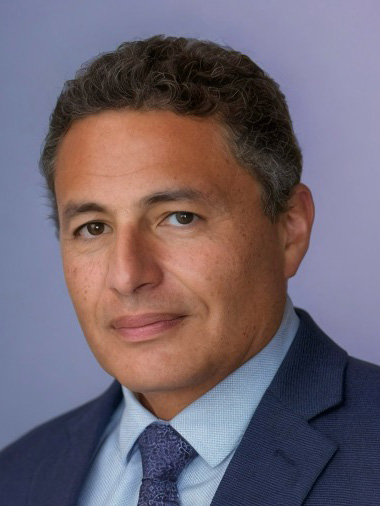
Sameh Yamany
CTO, Viavi, USA
Biography:
Dr. Sameh Yamany is CTO at VIAVI Solutions, spearheading innovations in 5G/6G, AI, quantum communications, and network testing. Previously CEO of Trendium, he revolutionized telecom analytics leading to acquisition. He held leadership roles at Tektronix Communications and academia as a professor. Sameh holds a Ph.D. from the University of Louisville, with extensive patents and publications. He is a recognized author and international speaker in wireless, AI, Quantum-comms, and biomedical innovations.
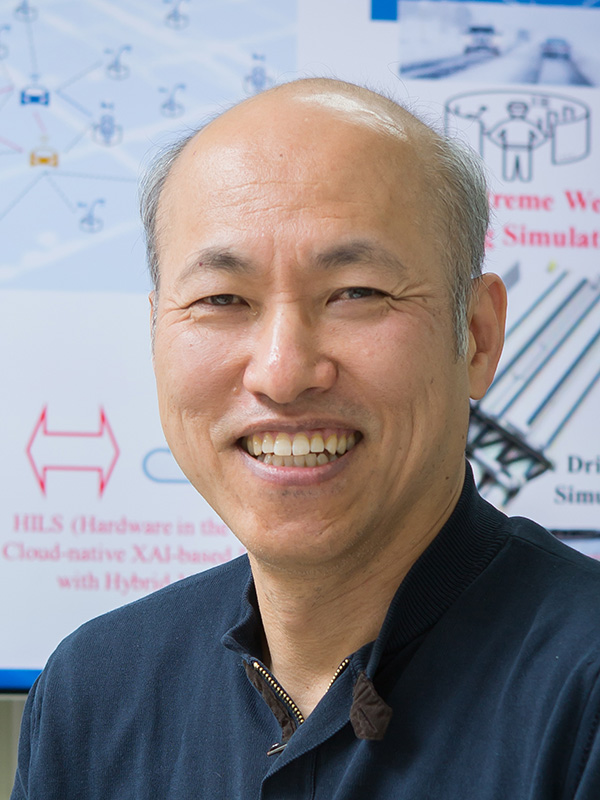
JongWon Kim
Vice-chair of Korea Supercomputing Forum, GIST, Korea
Biography:
JongWon Kim / Gwangju Institute of Science & Technology (GIST)
Ph.D. in Control and Instrumentation Engineering from Seoul National University, Korea (1994)
Inaugural Dean of GIST AI Graduate School, established as one of 10 government-sponsored AI graduate schools in Korea (2019 ~ )
Founding Director of GIST SCENT (Super Computing cENTer), where Top-500-listed DREAM-AI cluster is hosted (2008 ~ )
Organizing Chair of Open AI Edge Forum, Korea (2020 ~ )
Vice-chair of Korea Supercomputing Forum (2021 ~ )
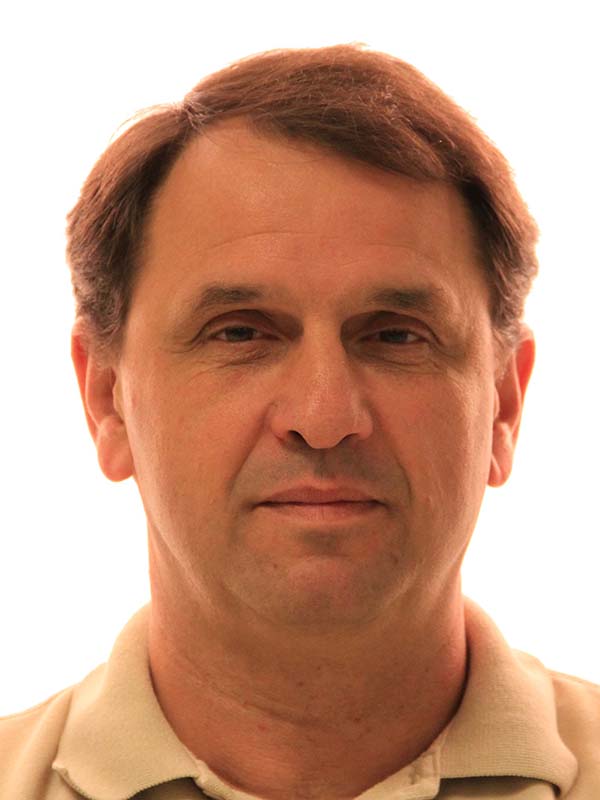
Ivan Seskar
Chief Technologist and Director/IT at WINLAB, Rutgers, USA
Biography:
Ivan Seskar is the Chief Technologist and Director/IT at WINLAB, Rutgers University responsible for experimental systems and prototyping projects. He is currently the program director for the COSMOS project responsible for the New York City NSF PAWR deployment. He has also been the co-PI and project manager for all three phases of the NSF-supported ORBIT mid-scale testbed project at WINLAB, successfully leading technology development and operations since the testbed was released as a community resource in 2005 and for which the team received the 2008 NSF Alexander Schwarzkopf Prize for Technological Innovation. Ivan is a co-chair of the IEEE Future Networks Testbed Working Group, member of the IEEE Standardization Programs Development Board and the co-founder and CTO of Upside Wireless Inc

Falko Dressler (IEEE/ACM/AAIA Fellow)
Professor,TU Berlin, Germany
Biography:
Falko Dressler is full professor and Chair for Telecommunication Networks at the School of Electrical Engineering and Computer Science, TU Berlin. He received his M.Sc. and Ph.D. degrees from the Dept. of Computer Science, University of Erlangen in 1998 and 2003, respectively. Dr. Dressler is an IEEE Fellow, an ACM Fellow, and an AAIA Fellow. He is a member of the German National Academy of Science and Engineering (acatech). His research objectives include next generation wireless communication systems in combination with distributed machine learning and edge computing for improved resiliency.

Ari Pouttu
Professor, Oulu, Finland
Biography:
Ari Pouttu is a professor of dependable wireless communications and has scientific and engineering experience as a researcher, project manager and research manager in various
domains of ICT development. The projects under his command have resulted in waveforms and system designs for military radio communication, radar systems, embedded device networks, future wireless radio communications including cellular systems, cognitive networks and navigation applications. He has published more than 90 conference or journal papers in the field of wireless communications and he holds two patents. He is the principal investigator of 5G test network (5GTN) experimental research, co-PI in seven HE projects and vice-director of the national 6G Flagship Programme as well as 6GESS programme targeting 6G solutions including wireless solutions for business verticals such as energy, industry, health, security & defence and vehicular.

Joyce Mwangama
Associate Professor, University of Cape Town, South Africa
Biography:
Joyce Mwangama holds the position of an associate professor and researcher in the Department of Electrical Engineering at the University of Cape Town (UCT), in Cape Town, South Africa. She obtained her PhD and MSc in Electrical Engineering, along with a BSc in Electrical and Computer Engineering, all from the University of Cape Town. Her prominent research interests centre on communication networks, next-generation networks, and digital health, where she leads efforts in setting up experimental next-generation mobile testbeds. Additionally, Joyce provides her expertise and guidance to the Independent Communications Authority of South Africa 5G Forum, contributing to the research and development of 5G/6G technologies.
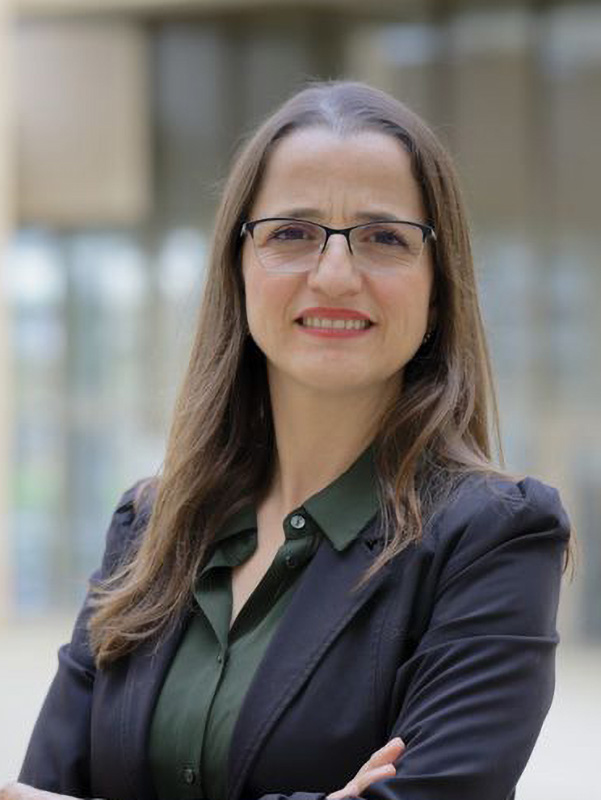
Hakima Chouchi
Professor, MT, France
Biography:
Prof. Hakima Chaouchi, Full Professor and Head of strategy of digital sovereignty and sobriety at Institut Mines Telecom, Chair of the Intermediary Supervisory Board of ESFRI SLICES research Infrastructure and vice chair of the State member representative group of the European JU SNS. She also served as telecom and 6G and future networks, Cloud and Cybersecurity Scientific Advisor at the Research and Innovation Strategy Service/French of High Education, Research Ministry-MESR, she also was the editor of the national research infrastructure roadmap of digital research infrastructures. Her research experience is in wireless and mobile communications , Internet of Things and cybersecurity with design and validation approach of architecture protocols and optimization.She acts in standardisation fora on Emerging Technologies as 6G.