


ICNC 2026 features four Distinguished Lectures, which are OPEN to ALL attendees of the conference and workshops.
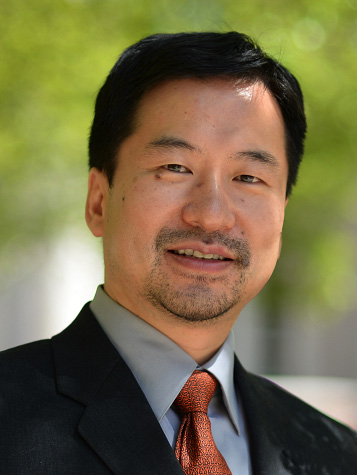
Shiwen Mao (IEEE Fellow)
Professor and Earle C. Williams Eminent Scholar, Auburn University, USA
Distinguished Lecture Title: Covert symbol embedding via chirp signals for integrated sensing and communications
Time: 10:00am - 11:00am, Monday, February 16, 2026
Abstract:
Shiwen Mao is a Professor and Earle C. Williams Eminent Scholar and Director of the Wireless Engineering Research and Education Center at Auburn University. Dr. Mao's research interest includes wireless networks, multimedia communications, and smart grid. He is the editor-in-chief of IEEE Transactions on Cognitive Communications and Networking, a member-at-large on the Board of Governors of IEEE Communications Society, and Vice President of Technical Activities of IEEE Council on Radio Frequency Identification (CRFID). He received the IEEE ComSoc MMTC Outstanding Researcher Award in 2023, the SEC 2023 Faculty Achievement Award for Auburn, the IEEE ComSoc TC-CSR Distinguished Technical Achievement Award in 2019, the Auburn University Creative Research & Scholarship Award in 2018, the NSF CAREER Award in 2010, and several service awards from IEEE ComSoc. He is a co-recipient of the 2022 Best Journal Paper Award of IEEE ComSoc eHealth Technical Committee, the 2021 Best Paper Award of Elsevier/KeAi Digital Communications and Networks Journal, the 2021 IEEE Internet of Things Journal Best Paper Award, the 2021 IEEE Communications Society Outstanding Paper Award, the IEEE Vehicular Technology Society 2020 Jack Neubauer Memorial Award, the 2018 Best Journal Paper Award and the 2017 Best Conference Paper Award from IEEE ComSoc MMTC, and the 2004 IEEE Communications Society Leonard G. Abraham Prize in the Field of Communications Systems. He is a co-recipient of the Best Paper/Demo Awards of 12 conferences. He is a Fellow of the IEEE.
Biography:
Shiwen Mao is a Professor and Earle C. Williams Eminent Scholar, and Director of the Wireless Engineering Research and Education Center at Auburn University. Dr. Mao's research interest includes wireless networks, multimedia communications, smart health, and smart grid. He is a Distinguished Lecturer of IEEE Communications Society (ComSoc), IEEE Council of RFID (2021-2023), and IEEE Vehicular Technology Society (2014-2021), and a Clarivate Highly Cited Researcher (2025). He received the Publication Excellence Award of Auburn University's Samuel Ginn College of Engineering in 2025, the IEEE MMTC Outstanding Research Award in 2023, SEC 2023 Faculty Achievement Award for Auburn, IEEE ComSoc TC-CSR Distinguished Technical Achievement Award in 2019, Auburn University Creative Research & Scholarship Award in 2018, NSF CAREER Award in 2010, and several service awards from the IEEE. He is a co-recipient of the 2022 Best Journal Paper Award of IEEE ComSoc eHealth Technical Committee, the 2021 Best Paper Award of Elsevier/KeAi Digital Communications and Networks Journal, the 2021 IEEE Internet of Things Journal Best Paper Award, the 2021 IEEE Communications Society Outstanding Paper Award, the IEEE Vehicular Technology Society 2020 Jack Neubauer Memorial Award, the 2018 Best Journal Paper Award and the 2017 Best Conference Paper Award from IEEE ComSoc Multimedia Communications Technical Committee, and the 2004 IEEE Communications Society Leonard G. Abraham Prize in the Field of Communications Systems. He is a co-recipient of the Best Paper Awards from WCSP 2024, IEEE GLOBECOM 2023 (two), 2019, 2016, and 2015, IEEE ICC 2022 and 2013, and IEEE WCNC 2015, and the Best Demo Awards from IEEE INFOCOM 2024, 2022, and IEEE SECON 2017. He is the Editor-in-Chief of IEEE Transactions on Cognitive Communications and Networking, a member-at-large of ComSoc Board of Governors (BOG, 2025-2027), ComSoc Director of Magazines (2026-2027), ComSoc Technical Committee Board Director (2022-2025), and the Vice President of Technical Activities of IEEE Council of RFID (2024-2027). He was the General Chair of IEEE INFOCOM 2022, a TPC Chair of IEEE INFOCOM 2018, and a TPC Vice-Chair of IEEE GLOBECOM 2022. He is a Fellow of IEEE and a life member of ACM.
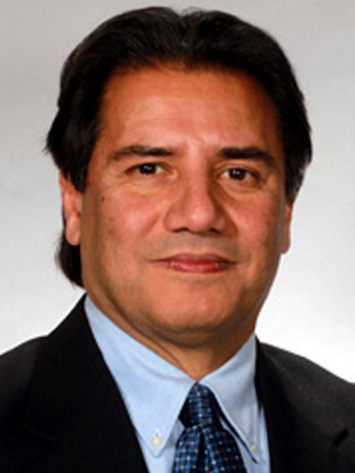
Hamid Sharif (IEEE Fellow)
Charles J. Vranek College of Engineering Professor, University of Nebraska-Lincoln, USA
Distinguished Lecture Title: Synthesizing Heterogeneous Multi-Domain Dataset to facilitatePrivacy and Risk Assessments in Smart City IoT
Time: 1:30pm - 2:30pm, Monday, February 16, 2026
Abstract:
As the Smart City paradigm expands, the integration of diverse IoT technologies has created unprecedented opportunities for urban optimization but also intensified critical privacy risks through cross-modal data linkage. Traditional research is often hindered by the lack of high-resolution, multi-domain data that protects individual identities while maintaining behavioral accuracy. To address this, a statistically grounded theory is presented for synthesizing large-scale, multimodal IoT datasets in the context of Smart City privacy. This talk discusses a methodology that ensures behavioral realism and ecological validity without requiring the use of real-world personal information. It also provides a vital, privacy-safe benchmark for evaluating cross-modal risk assessments and privacy-enhancing technologies.
Biography:
Dr. Hamid Sharif is an IEEE Fellow and the Charles J. Vranek Distinguished Professor with the Department of Electrical and Computer Engineering at the University of Nebraska-Lincoln (UNL). He is also the Director of the Advanced Telecommunication Engineering Laboratory (TEL) at UNL. He has nearly 40 years of academic and industrial experience. He has published over 450 research articles in national and international journals and conferences and has served on many IEEE and other international journal editorial boards. Dr. Sharif has served as PI/Co-PI for a large number of research projects funded by DoE, DoT, NSF, DoD, and local and national industries. His research has been recognized through numerous research awards and best paper awards. He has been a Distinguished Lecturer for the IEEE Vehicular Technology Society.
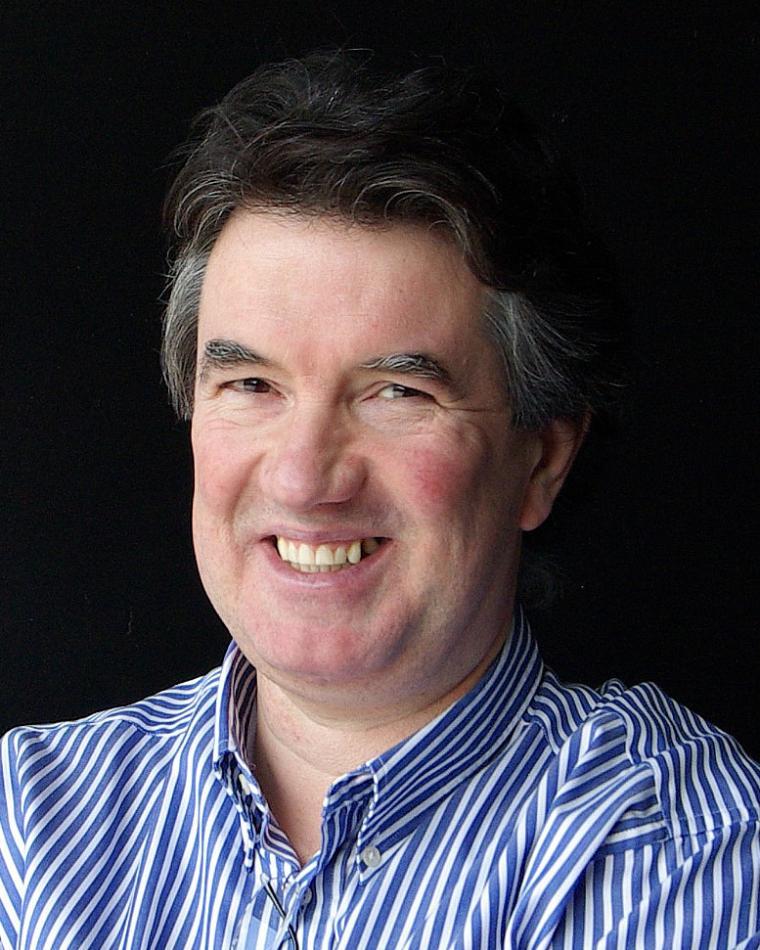
Dirk Slock (IEEE Fellow)
Professor, EURECOM, France
Distinguished Lecture Title: Accelerated Iterative Optimization with Application to Stochastic Gradient Techniques and Alternating Optimization
Time: 2:30pm - 3:30pm, Monday, February 16, 2026
Abstract:
In this talk we review existing acceleration methods.
Two big families arise, either Nesterov acceleration or Successive
Over-Relaxation.
Acceleration has been applied for some time in machine learning.
E.g. in compressive sensing, esp. for LASSO in the form of the Fast Iterative
Shrinkage and Thresholding Algorithm (FISTA), where
standard Nesterov acceleration is used. Recently, optimized
stepsizes have been proposed for successice convex approximations
(SCAs) (majorization) and momentum terms, and extending
stepsize optimization from line search to 2D stepsize subspace
optimization. This brings up connections with the Affine
Projection Algorithm (APA) which is a multi-dimensional
projection generalization of the Normalized LMS algorithm.
Another important instance is stepsize adaptation in
stochastic gradient techniques, which is an old topic in
adaptive filtering but today forms the basis for deep learning,
where various forms of the ADAM algorithm are used.
Another class of iterative techniques is alternating optimization.
This appears e.g. in utility optimization where various majorization
approaches allow to transform a Weighted Sum Rate criterion into a
cost function that is quadratic in Tx or in Rx and is simple to
optimize in terms of other parameters.
The standard strategy is then to apply alternating
minimization to the majorizer. These alternating approaches
converge fairly slowly. Another issue that they typically are
guaranteed to converge, but to a local optimum. Deterministic
annealing has been proposed to find the global optimum. To
reduce convergence time, acceleration techniques can be introduced.
Basic alternating minimization of a quadratic cost function leads to
the Gauss-Seidel algorithm, whereas one accelerated form is
Successive Over-Relaxation. It has been shown that optimized relaxation
can lead to similar acceleration as in the Nesterov case.
On the other hand, Nesterov acceleration has been applied also to
alternating minimization and the question arises which
approach would be best suited to alternating optimization.
Biography:
Dirk T.M. Slock received an EE degree from Ghent University, Belgium in 1982. In 1984 he was awarded a Fulbright scholarship for Stanford University, USA, where he received the MSEE, MS in Statistics, and PhD in EE in 1986, 1989 and 1989 resp. While at Stanford, he developed new fast recursive least-squares algorithms for adaptive filtering. In 1989-91, he was a member of the research staff at the Philips Research Laboratory Belgium. In 1991, he joined EURECOM where he is now professor. At EURECOM, he teaches statistical signal processing (SSP) and signal processing techniques for wireless communications. He invented semi-blind channel estimation, the chip equalizer-correlator receiver used by 3G HSDPA mobile terminals, spatial multiplexing cyclic delay diversity (MIMO-CDD) now part of LTE, and his work led to the Single Antenna Interference Cancellation (SAIC) integrated in the GSM standard in 2006. Recent keywords are multi-cell multi-user (Massive) MIMO, imperfect CSIT, distributed resource allocation, variational and empirical Bayesian learning techniques, large random matrix analysis, audio source separation, location estimation and exploitation. He graduated about 40 PhD students, leading to an edited book and 500+ papers. In 1992 he received one best journal paper award from IEEE-SP and one from EURASIP. He is the coauthor of two IEEE Globecom'98, one IEEE SIU'04, one IEEE SPAWC'05, one IEEE WPNC’16 and one IEEE SPAWC’18 best student paper award, and a honorary mention (finalist in best student paper contest) at IEEE SSP'05, IWAENC'06, IEEE Asilomar'06 and IEEE ICASSP’17. He was an associate editor for the IEEE-SP Transactions in 1994-96 and the IEEE Signal Processing Letters in 2009-10. He was the General Chair of the IEEE-SP SPAWC'06 and IWAENC’14 workshops, and EUSIPCO’15. He cofounded the start-ups SigTone in 2000 (music signal processing products) and Nestwave in 2014 (Ultra Low-Power Indoor and Outdoor Mobile Positioning). He is a Fellow of IEEE and EURASIP. In 2018 he received the URSI France medal.
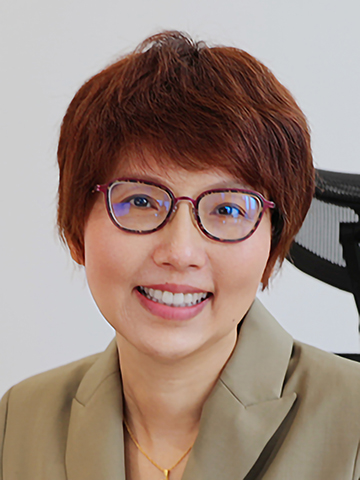
Liuqing Yang (IEEE/AAIA/RAeS Fellow)
Chair Professor, The Hong Kong University of Science and Technology-Guangzhou, China
Distinghuished Lecture Title: Synesthesia of Machines (SoM) Empowered Wireless Intelligent Transmission (WiT) via Multi-Modal Sensing and Foundation Models
Time: 11:00am - 12:00pm, Monday, February 16, 2026
Abstract:
As wireless technology continues to evolve, there is an increasing demand for innovative solutions that can meet the challenges of dynamic and complex communication environments. The traditional approaches to wireless transmission face limitations in scalability, efficiency, and adaptability. The SoM framework addresses these challenges by integrating multi-modal sensing and large foundation models, offering a novel pathway to enhance WiT. By empowering wireless systems with AI capabilities, this tutorial aims to inspire new innovations that improve reliability, efficiency, and adaptability in communication networks, ultimately contributing to the development of robust and intelligent wireless systems for the future.
Biography:
Liuqing Yang (Fellow, IEEE) received the Ph.D. degree from the University of Minnesota in 2004. She is a Fellow of IEEE, RAeS, and AAIA. Prof. Yang has been a faculty member with University of Florida, Colorado State University, and University of Minnesota, and is currently a Chair Professor with the Hong Kong University of Science and Technology (Guangzhou), where she serves as the Head of Intelligent Transportation (INTR) Thrust. Her research interests include communications, sensing, and networked intelligence, subjects on which she has published more than 400 journal and conference papers, four book chapters, and five books. She is a recipient of ONR YIP Award in 2007, NSF CAREER Award in 2009, and multiple Best Paper Awards. Prof. Yang is an Executive Editorial Committee (EEC) Member of the IEEE Transactions on Wireless Communications. She has also served as the Editor-in-Chief of IET Communications, on the editorial board for an array of elite journals including IEEE Transactions on Signal Processing, IEEE Transactions on Communications, and IEEE Transactions on Intelligent Transportation Systems as well as in leadership roles for many conferences.