


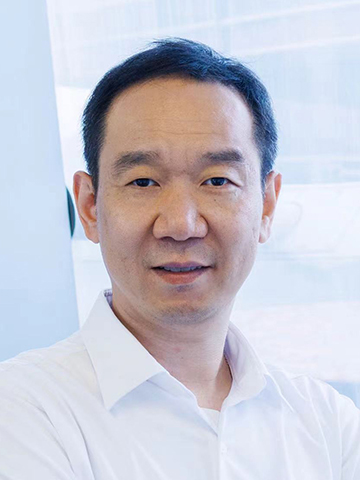
Song Guo (IEEE/CAE Fellow)
Chair Professor, Hong Kong University of Science and Technology, Hong Kong
Distinguished Lecture Title: Towards Edge-Native Foundation Models: A Paradigm Shift in AI Construction, Deployment and Governance at the Edge
Time: 4:00m - 5:00pm, February 17, 2025
Abstract:
Foundational models such as GPT, LLaMA, and DALL-E have been transformative in the field of AI, demonstrating extraordinary versatility across a wide range of tasks. However, the full potential of edge computing (with its inherent advantages in cost, latency, and privacy) remains untapped in deploying these models. In this talk, we unveil the concept of edge-native foundational models, an innovative approach to leveraging distributed, diverse, and collaborative edge computing resources. We envision a future where foundational models will be conceived, cultivated, and utilized in the edge ecosystem.
Biography:
Song Guo is a Chair Professor in the Department of Computer Science and Engineering at the Hong Kong University of Science and Technology. He also holds Changjiang Chair Professor awarded by the Ministry of Education of China. Prof. Guo made fundamental and pioneering contributions to the development of edge AI and cloud-edge computing. He published many papers in top venues and received over a dozen Best Paper Awards from IEEE/ACM conferences and journals. He is the recipient of Edward J. McCluskey Technical Achievement Award (IEEE Computer Society) in 2024, First Prize in Natural Science (China Electronics Society) in 2023, and Gold Medal in 2023 Geneva Inventions Expo, etc. He is a Fellow of the Canadian Academy of Engineering, Member of Academia Europaea, and Fellow of the IEEE.
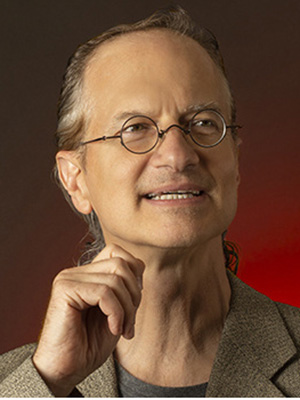
David W. Matolak (IEEE Fellow)
Professor, University of South Carolina, USA
Distinguished Lecture Title: Recent Results on the Road to Assured Aviation Communications
Time: 10:00am - 11:00am, Monday, February 17, 2025
Abstract:
Aviation is the safest means of travel. Although flying always presents challenges, the expected growth in airspace travel will require even more accurate and dependable aviation systems for communications, navigation, and surveillance (CNS) in the future. NASA’s Advanced Air Mobility (AAM) program aims to transport both cargo and people via low-altitude flights near and within urban areas; other related programs are underway worldwide. As the density of this air traffic increases, these CNS links will need to be more reliable than ever before. In this presentation, we briefly survey aviation history, then describe some current trends. We show results from some recent work on airport communications, then turn to the future of AAM. The focus is on the physical layer, and we first describe several requirements and challenges to reliable aviation communications. One of the most significant of these is the wireless channel and the signaling degradation it can produce. We provide an overview of past results on the air-ground channel, and then describe some of our most recent, low-altitude urban air-ground channel measurements. The talk will conclude with comments on areas for future work.
Biography:
David W. Matolak received the B.S. degree from The Pennsylvania State University, M.S. degree from The University of Massachusetts, and Ph.D. degree from The University of Virginia, all in electrical engineering. He has over 25 years’ experience in communication system research, development, and deployment, with industry, government institutions, and academia, including AT&T Bell Labs, L3 Communication Systems, MITRE, and Lockheed Martin. He has over 270 refereed publications and ten patents. He was a professor at Ohio University (1999-2012), and since 2012 has been a professor at the University of South Carolina. He has been Associate Editor for several IEEE journals, and has delivered several dozen invited presentations at a variety of international venues. His research interests are radio channel modeling, communication techniques for non-stationary fading channels, and secure communications. Prof. Matolak is a Fellow of the IEEE, a member of standards groups in RTCA and ITU, and a member of Eta Kappa Nu, Sigma Xi, Tau Beta Pi, URSI, ASEE, AAAS, and AIAA.
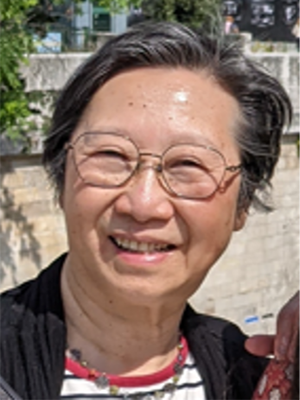
Yi Lu Murphey (IEEE Fellow)
Paul K Trojan Collegiate Professor, University of Michigan-Dearborn, USA
Distinguished Lecture Title: Development of Data Mining and Machine Learning Methodologies to Advance Knowledge of Drivers’ Behaviors and physiological responses in Naturalistic Driving
Time: 11:00am - 10:00pm, Monday, February 17, 2025
Abstract:
This lecture presents data mining and machine learning methodologies we developed to support data-driven, long-term and large scale research in the areas of in-vehicle monitoring, learning, and assessment of older adults’ driving behavior and physiological responses through large amount of naturalistic driving data. The following topics will be covered in this lecture: 1) the instrumentation of a transportable data acquisition system (TDAS) used for collecting naturalistic multimodality data during driving trips. The TDAS can be easily transported from vehicle to vehicle allowing drivers to use their own cars while their driving trips are recorded, (2) automatic methods for detecting and cleaning noise sensor data, and for synchronizing signals recorded by multiple devices, (3) an ontology, Driver-Trip-Context (DTC), which facilitates the integration of semantic heterogeneity at multiple levels of details, and (4) machine learning algorithms developed to investigate driver behaviors and physiological responses during driving, which may serve as potential biomarkers of cognitive decline in older adults.
Biography:
Dr. Yi Lu Murphey is the Paul K Trojan Collegiate Professor of Engineering at the University of Michigan-Dearborn. She received a Ph.D degree in Computer Engineering at the University of Michigan, Ann Arbor, Michigan, in 1989. Her research interests are in the areas of machine learning, AI, pattern recognition and computer vision with applications to automated driving, connected vehicles, optimal vehicle power management, driver behavior analysis and prediction, and vehicle position and trajectory prediction. She has authored over 200 publications in refereed journals and conference proceedings. She is an associate editor for the Journal of Pattern Recognition. Her research has been funded by the National Science Foundation (NSF), National Institute of Health (NIH), Department of Energy (DoE), US Army TARDEC, State of Michigan, Ford Motor Company, TRW, Nissan, and many others. She is a fellow of IEEE, a Distinguished Lecturer for both IEEE Vehicular Society and IEEE Computational Intelligence Society.
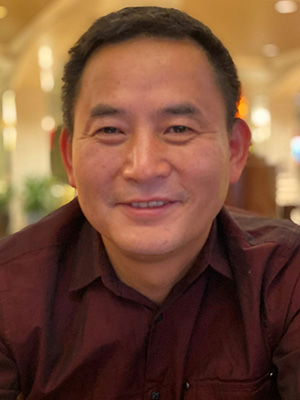
Honggang Wang (IEEE Fellow)
Founding Chair and Professor, Yeshiva University, USA.
Distinguished Lecture Title: A Neural Network Model for Autonomous Vehicles Safety Check Using Camera-only and Camera-LiDAR Images
Time: 5:00m - 6:00pm, February 17, 2025
Abstract:
Camera and LiDAR sensors play a crucial role in vehicle perception systems, enabling the accurate detection of obstacles and other vehicles in autonomous driving technologies. Despite their complementary advantages, ensuring the reliability of camera data under varying environmental conditions presents a significant challenge.
We introduce a novel system for checking the consistency of camera data through two methods: (1) a camera-only consistency checking mechanism that utilizes an effective point-to-point feature extraction neural network inspired by the D2-Net method, and (2) a camera-LiDAR fusion consistency checking approach that employs advanced sensor fusion techniques.
By integrating a critical reliability check for camera data and fusing it with LiDAR information, our system takes advantage of both sensor types to enhance the robustness and efficiency of autonomous vehicle navigation. Experimental results demonstrate that the proposed methods significantly improve the safety and performance of autonomous driving by ensuring reliable sensor data fusion, enabling safe navigation even in challenging environments.
Biography:
Dr. Honggang Wang is the founding Chair and Professor of the Department of Graduate Computer Science and Engineering, Katz School of Science and Health, Yeshiva University in New York City. He was a professor and the “Scholar of The Year” (2016) at UMass Dartmouth (UMassD). He was early promoted to full professor at UMassD in 2020. He is an alumnus of NAE Frontiers of Engineering program. He has graduated 30 MS/Ph.D. students and produced high-quality publications in prestigious journals and conferences in his research areas, winning several prestigious best paper awards. His research interests include Internet of Things and its applications in health and transportation (e.g., autonomous vehicles) domains, Machine Learning and Big Data, Multimedia and Cyber Security, Smart and Connected Health, Wireless Networks and Multimedia Communications. He is an IEEE distinguished lecturer and a Fellow of IEEE and AAIA (Asia-Pacific Artificial Intelligence Association). He has also been serving as the Editor in Chief (EiC) for IEEE Internet of Things Journal (5 Year Impact Factor: 11.7) since 2020. He was the past Chair (2018-2020) of IEEE Multimedia Communications Technical Committee and the IEEE eHealth Technical Committee Chair (2020-2021).