


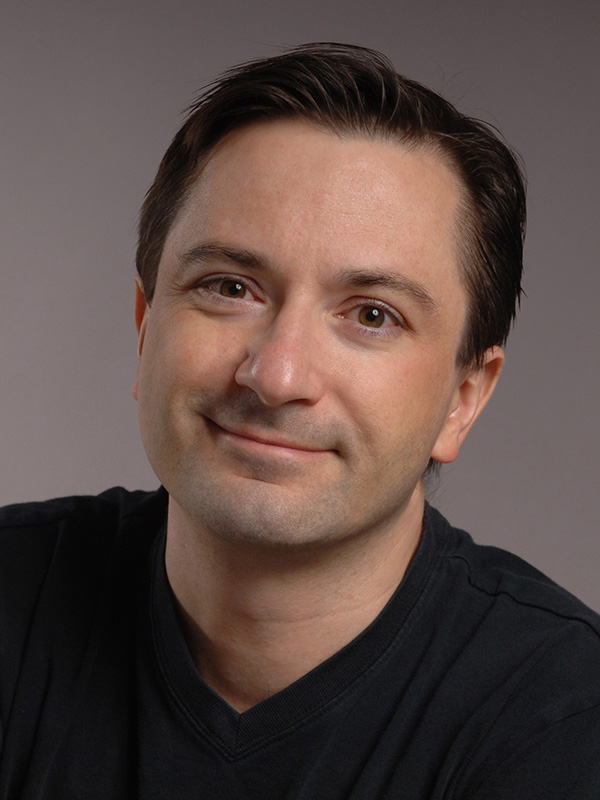
Richard G. Baraniuk (NAE/NAAS, IEEE/NAI/AAAS Fellow)
C. Sidney Burrus Professor, Rice University, USA.
Keynote Talk Title: Going Off the Deep End with Deep Learning
Time: 8:30-9:30, Wednesday, February 22, 2023
Abstract:
Over the past decade, deep (neural) networks trained using massive data sets have enabled remarkable progress on a wide range of challenging computational problems, from pattern recognition and image synthesis to language translation and protein folding. Nevertheless, this progress has been alchemistic and driven largely by empirical observations, hacks, and tricks. Fundamental questions remain, such as: Why do deep learning methods work? When do they work? And how can they be fixed when they don’t work? Intuitions abound, but a coherent framework for understanding, analyzing, and synthesizing deep learning architectures remains elusive. This talk will discuss the implications of this lack of understanding for consumers, practitioners, and researchers of machine learning. We will also briefly overview recent progress towards a theory of deep learning based on rigorous mathematical principles. Of the several promising avenues of research, we will focus on the connection between deep networks and spline approximation that provides a geometric interpretation for how deep networks organize and process data.
Biography:
Richard G. Baraniuk is the C. Sidney Burrus Professor of Electrical and Computer Engineering at Rice University and the Founding Director of OpenStax. His research interests lie in new theory, algorithms, and hardware for sensing, signal processing, and machine learning. He is a Member of the National Academy of Engineering and American Academy of Arts and Sciences and a Fellow of the National Academy of Inventors, American Association for the Advancement of Science, and IEEE. He has received the DOD Vannevar Bush Faculty Fellow Award (National Security Science and Engineering Faculty Fellow), the IEEE Signal Processing Society Technical Achievement Award, the Harold W. McGraw, Jr. Prize in Education, and the IEEE James H. Mulligan, Jr. Education Medal, among others.
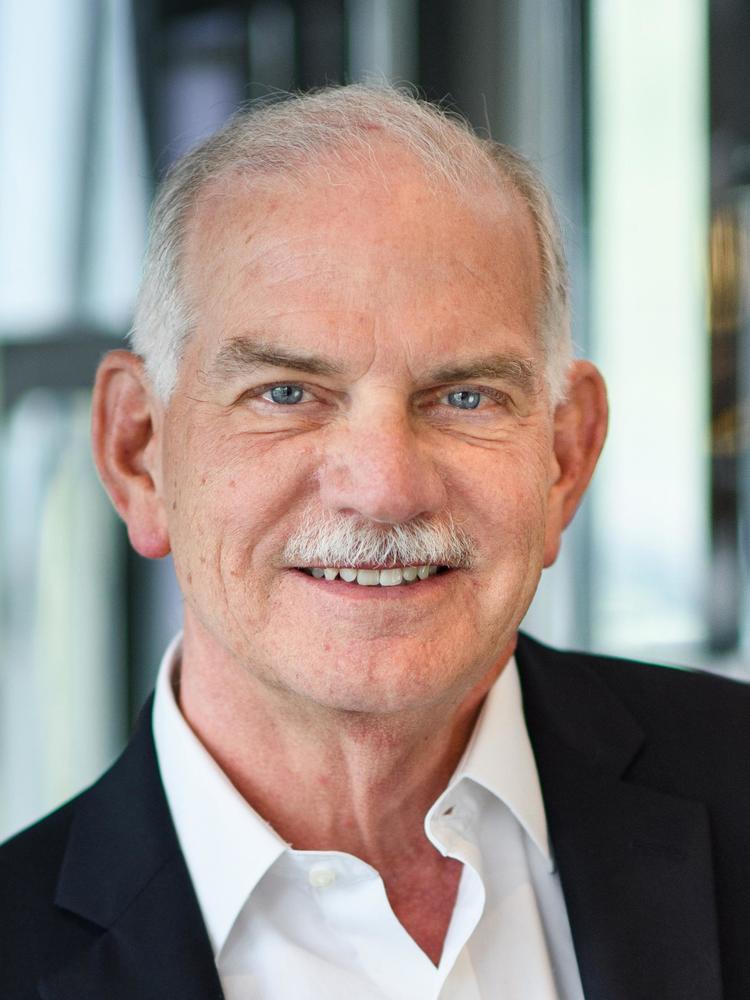
H. Vincent Poor (NAS/NAE, IEEE/AAAS Fellow)
Michael Henry Strater University Professor, Princeton University, USA.
Keynote Talk Title: Federated Learning in V2X Networks
Time: 8:30-9:30, Monday, February 20, 2022
Abstract:
The fifth generation and the emerging sixth generation of cellular networks aim to support vehicular networks, including communication among vehicles, pedestrians and road infrastructures, i.e., vehicle-to-everything (V2X) communications. These networks face difficult wireless propagation conditions due to rapidly varying channels, and must support low latency and high reliability, with vehicles forming dynamic topologies. However, with the help of such networks, vehicular applications can apply distributed machine learning techniques to enable assisted and self-driving systems. Federated learning (FL) is a collaborative distributed machine learning paradigm that is well-suited to this application. This talk will introduce the fundamentals of FL over wireless networks and discuss applications of FL in V2X communications, highlighting challenges, solutions, and open problems arising from the integration of these two technologies.
Biography:
H. Vincent Poor is the Michael Henry Strater University Professor at Princeton University, where research interests are in the areas of information theory, machine learning and network science, and their applications in wireless networks, energy systems and related fields. He has also held visiting appointments at several other universities as well, including most recently at Berkeley and Cambridge. Among his recent publications is the book Machine Learning and Wireless Communications (Cambridge University Press, 2022). Dr. Poor is a member of the U.S. National Academy of Engineering and the U.S. National Academy of Sciences, and he is a foreign member of the Chinese Academy of Science, the Royal Society and other national and international academies. He received the IEEE Alexander Graham Bell Medal in 2017.
Weihua Zhuang (IEEE/RSC/CAE Fellow)
University Professor, University of Waterloo, Canada
Keynote Talk Title: Stochastic Cumulative DNN Inference for Intelligent IoT Applications
Time: 8:30-9:30, Tuesday, February 21, 2023
Abstract:
Artificial intelligence models will continue to be pervasively deployed to support diverse intelligent Internet of Things (IoT) applications in the 5G/6G era. Many such applications rely on deep neural networks (DNN) for object classification. In this presentation, DNN inference uses a pre-trained DNN model to process an input data sample such as raw sensing data, and generates a classification result. We will discuss when to offload DNN inference computation from resource constrained IoT devices to the edge and how to incorporate different contributions from multiple random DNN inference results to improve task classification accuracy, while achieving high transmission, computation, and energy resource utilization.
Biography:
Weihua Zhuang is a University Professor and a Tier I Canada Research Chair in Wireless Communication Networks at University of Waterloo, Canada. Her research focuses on network architecture, algorithms and protocols, and service provisioning in future communication systems. She was the Editor-in-Chief of the IEEE Transactions on Vehicular Technology from 2007 to 2013, General Co-Chair of 2021 IEEE/CIC International Conference on Communications in China (ICCC), Technical Program Chair/Co-Chair of 2017/2016 IEEE VTC Fall, and Technical Program Symposia Chair of 2011 IEEE Globecom. She is an elected member of the Board of Governors and the Executive Vice President of the IEEE Vehicular Technology Society. Dr. Zhuang is a Fellow of the IEEE, Royal Society of Canada, Canadian Academy of Engineering, and Engineering Institute of Canada.
Fumiyuki Adachi (IEEE Life Fellow, IEICE Fellow)
Specially Appointed Research Fellow, Professor Emeritus, Tohoku University, Japan
Title: A concept of user-centric ultra-dense distributed MIMO towards realizing Beyond 5G systems
Time: 13:30-14:30, Monday, February 20, 2023
Abstract:
The mobile data traffic is ever increasing. Due to the limited available radio bandwidth, the spectrum efficiency of mobile communication systems need to be significantly improved. In the 5th generation (5G) systems, the mmWave band where a large bandwidth is available is utilized. However, mmWave signals have a strong rectilinear propagation property and the blockage happens frequenctly, thereby reducing the communication reliability. An effective approach for improving both the spectrum efficiency and the communication reliability is to utilize a multi-user distributed multi-input multi-output (MIMO) cooperative transmission/reception technique, in which a number of antennas are distributed over the communication service area. However, this approach requires a prohibitively high computational complexity to accomodate a large number of users and thus, may not be practical. In order to reduce the complexity to a practical level, user-clusters (or virtual small-cells) are formed and a small-scale multi-user MIMO cooperative transmission/reception is performed in paralle in all user-clusters using the same frequency. However, in turn, severe inter-cluster interference is produced and limits the improvement of sprectrum efficiency and communication reliability. Hence, an introduction of interference suppression technique is crucial. In this talk, we will present a concept of a user-centric ultra-dense distributed MIMO employing user-clustering and interference suppression and show its improved spectrum efficiency by computer simulation.
Biography:
Fumiyuki Adachi received the B.S. and Dr. Eng. degrees in electrical engineering from Tohoku University, Sendai, Japan, in 1973 and 1984, respectively. In April 1973, he joined the Electrical Communications Laboratories of Nippon Telegraph & Telephone Corporation (now NTT) and conducted various researches on digital cellular mobile communications. From July 1992 to December 1999, he was with NTT Mobile Communications Network, Inc. (now NTT DoCoMo, Inc.), where he led a research group on Wideband CDMA for 3G systems. Since January 2000, he has been with Tohoku University, Sendai, Japan. His research interests are in the area of wireless signal processing (multi-access, equalization, antenna diversity, adaptive transmission, channel coding, etc.) and networking.
He is an IEEE Life Fellow and an IEICE Fellow. He was a recipient of the IEEE Vehicular Technology Society Avant Garde Award 2000, IEICE Achievement Award 2002, Thomson Scientific Research Front Award 2004, Ericsson Telecommunications Award 2008, Prime Minister Invention Award 2010, KDDI Foundation Excellent Research Award 2012, C&C Prize 2014, IEEE VTS Stuart Meyer Memorial Award 2017, and IEEE ComSoc RCC Technical Recognition Award 2017.
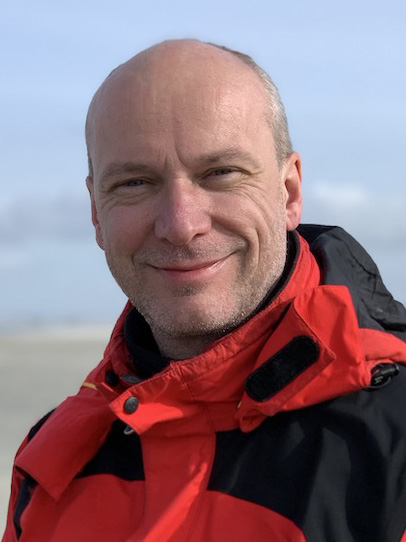
Falko Dressler (IEEE Fellow)
Professor, TU Berlin, Germany
Title: Learning for Resilient Virtualized Edge Computing
Time: 13:30 - 14:30, Tuesday, February 21, 2023
Abstract:
We will discuss the challenges and opportunities of distributed data management solutions ranging from the mobile edge to the data centers. Modern 5G networks promise to provide all means for communication in this domain, particularly when integrating Mobile Edge Computing (MEC). However, it turns out that despite the many advantages, it is unlikely that such services will be provided with sufficient coverage. As a novel concept, virtualized edge computing (V-Edge) have been proposed that bridges this gap. We present a learning-based approach to make such an V-Edge resilient to dynamics, failures, and even malicious attacks. IN particular, we contrast centralized and federated learning approaches and reinforcement based approaches.
Biography:
Falko Dressler is full professor and Chair for Telecommunication Networks at the School of Electrical Engineering and Computer Science, TU Berlin. He received his M.Sc. and Ph.D. degrees from the Dept. of Computer Science, University of Erlangen in 1998 and 2003, respectively. Dr. Dressler has been associate editor-in-chief for IEEE Trans. on Mobile Computing and Elsevier Computer Communications as well as an editor for journals such as IEEE/ACM Trans. on Networking, IEEE Trans. on Network Science and Engineering, Elsevier Ad Hoc Networks, and Elsevier Nano Communication Networks. He has been chairing conferences such as IEEE INFOCOM, ACM MobiSys, ACM MobiHoc, IEEE VNC, IEEE GLOBECOM. He authored the textbooks Self-Organization in Sensor and Actor Networks published by Wiley & Sons and Vehicular Networking published by Cambridge University Press. He has been an IEEE Distinguished Lecturer as well as an ACM Distinguished Speaker. Dr. Dressler is an IEEE Fellow as well as an ACM Distinguished Member. He is a member of the German National Academy of Science and Engineering (acatech). He has been serving on the IEEE COMSOC Conference Council and the ACM SIGMOBILE Executive Committee. His research objectives include adaptive wireless networking (sub-6GHz, mmWave, visible light, molecular communication) and wireless-based sensing with applications in ad hoc and sensor networks, the Internet of Things, and Cyber-Physical Systems.
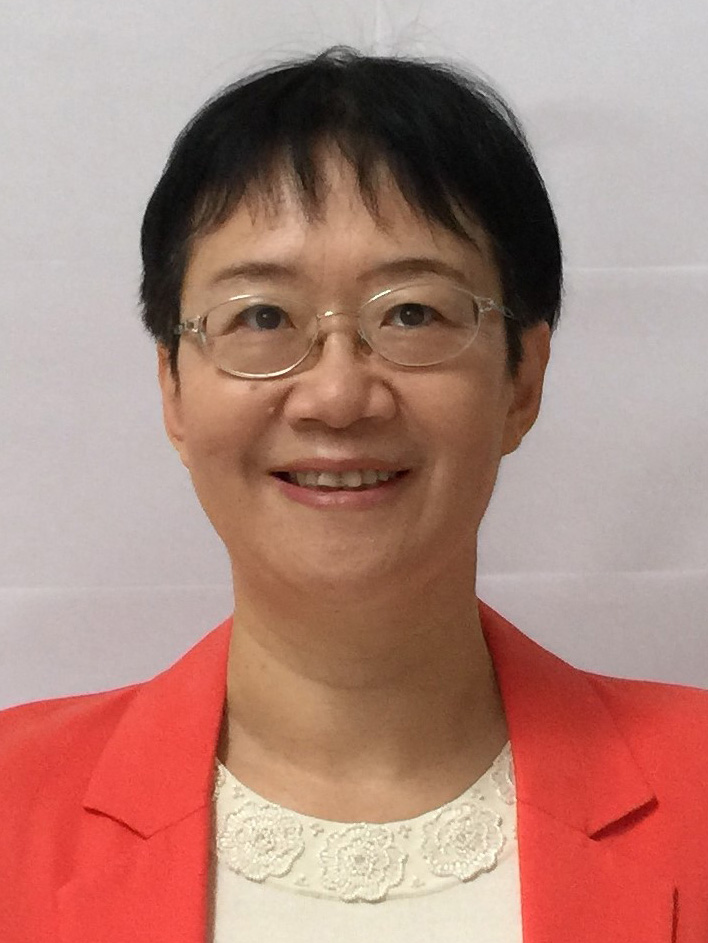
Ling Liu (IEEE Fellow)
Professor, Georgia Institute of Technology, USA.
Title: From Edge Video Analytics to Federated Learning
Time: 14:30 - 15:30, Tuesday, February 21, 2023
Abstract:
The rapid growth of wireless mobile broadband communication networks has fueled new capabilities in scalable device-to-edge-to-cloud continuum, ranging from increased data rates of 1~10 Gbps, ultra-low latencies of 1ms or less, larger coverage with massive number of devices connected 24x7. These advances have enabled exciting new edge native applications, such as Augmented Reality/Virtual Reality (AR/VR) and video analytics. However, unlike Clouds, edge clients have little elasticity in computing and communication resources, are intermittently connected to the Internet, inherently heterogeneous in computing resource, and more exposed to privacy and security violations. In this keynote, I will use edge video analytics and federated learning as two emerging and complimentary distributed learning paradigms in navigating this device-edge-cloud continuum, while considering resilience, privacy, and multi-tenancy of shared and heterogeneous resources. I will describe alternative distributed learning architectures and optimization strategies, enabling edge system adaptability and robustness, while preserving good application fidelity (level of accuracy).
Biography:
Ling Liu is a full professor in the School of Computer Science at Georgia Institute of Technology. She directs the research programs in the Distributed Data Intensive Systems Lab (DiSL), examining various aspects of big data systems and analytics. Prof. Liu is an elected IEEE Fellow, a recipient of IEEE Computer Society Technical Achievement Award (2012), and a recipient of the best paper award from numerous top venues, including IEEE ICDCS, WWW, ACM/IEEE CCGrid, IEEE Cloud, IEEE ICWS. Prof. Liu served on editorial board of over a dozen international journals, including the editor in chief of IEEE Transactions on Service Computing (2013-2016). Prof. Liu is currently the editor in chief of ACM Transactions on Internet Computing (since 2019). Her current research is primarily supported by National Science Foundation, CISCO and IBM.
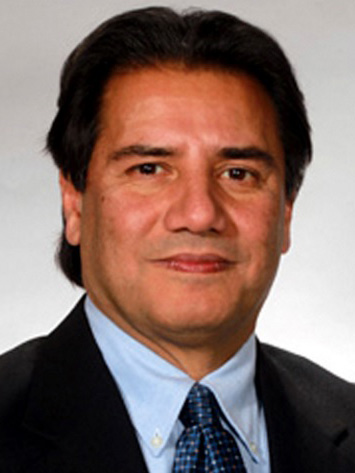
Hamid Sharif (IEEE Fellow)
Charles Vranek Professor, University of Nebraska-Lincoln, USA.
Title: OT Cybersecurity Verification and Validation
Time: 14:30 - 15:30, Monday, February 20, 2023
Abstract:
The need for Operational Technology (OT) cybersecurity has grown significantly. OT devices include industrial control systems and physical access control mechanisms, which detect or cause changes in physical processes. The focus of OT generally has not been on cybersecurity since these devices benefited from inherent system isolation and lack of widespread connectivity. But the trend in IT-OT convergence has caused previously isolated systems being now connected to IT and Internet networks, which poses significant cybersecurity challenges.
In this talk, Dr. Sharif will discuss CYVET: Cyber-Physical Security Assurance Framework based on a Semi-Supervised Vetting Approach, which directly provides a cybersecurity verification and validation framework testing capability for OT equipment and the underlying control systems. This is to fill a significant gap in cybersecurity capabilities for infrastructure improvement, equipment procurement, and compliance certification.
Biography:
Dr. Hamid Sharif is an IEEE Fellow and the Charles J. Vranek Distinguished Professor in the Department of Electrical and Computer Engineering at the University of Nebraska-Lincoln (UNL). He is also the Director of Advanced Telecommunications Engineering Laboratory (TEL) at UNL. He has over 35 years of academic and industrial research experience in Mobile Communications, Intelligent Transportation, Wireless for Railroads, Network Security, Mobile Communication Security, and IoT Cooperative Communications.
He has published over 360 research articles in national and international journals and conferences and has been serving on many IEEE and other international journal's editorial boards. He has been the recipient of a number of research awards and best papers. He is also the recipient of the prestigious Fulbright Fellowship Award in Science, Technology and Innovation in 2013. He is currently a Distinguished Lecturer for the IEEE Vehicular Technology Society.